BUMC NTCC/URSA New Staff Survival Guide 2026
URSA/NTCC Physician Onboarding Process and Framework (90 Day Model)
The organization (URSA/NTCC) is committed to ensuring all newly appointed surgeons and critical care physicians receive structured onboarding that promotes patient safety, operational efficiency, professional satisfaction, and long-term retention.
Surgeon/Physician Template
Phase 1: Pre-Boarding (90 Days Before Start at minimum)
Objectives:
- Credentialing & Privileging
- Compliance completion
- Schedule alignment
- Cultural preparation and training
- Texas Medical License – can sometimes take 4-6 months
Checklist Template
Administrative
- Credentialing submitted to Medical Staff Office
- Privileging application completed
- State license verified
- DEA registration verified
- Board certification documentation
- Malpractice coverage confirmed with URSA
- Enrollment with payers and billing training
- Enrollment with Health Benefits/retirement plan etc.
IES/ URSA HR & Compliance
- Employment contract executed
- Code of Conduct reviewed and signed
- Background check
- I-9 verification
- HIPAA training - BUMC
- OSHA training – BUMC
- CMS billing and compliance training – per Chris Kethley
Operational Setup
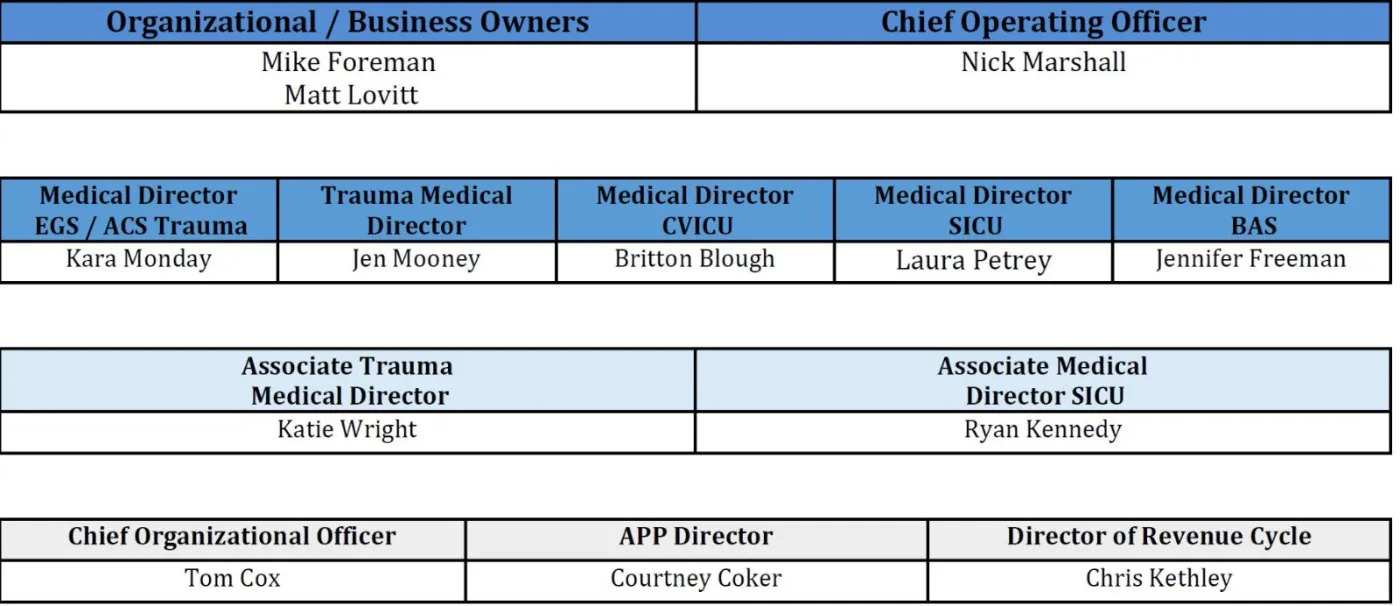
URSA / NTCC Organization
- Clinic schedule (surgeons) – Thursdays at 10 AM. Assigned by call schedule per Dr. Katie Wright
- Case Cards (surgeons):
- BUMC: contact Erin Smith, Supervisor in BUMC OR Erin.Smith@BSWHealth.org
- BAS: contact, OR lead
- Plano: contact Nita Kavian, OR supervisor, can pull preference cards from BUMC
- Website bio creation by physician/APP. Look at Urgent Surgery Associates, PA site for examples.
- Professional picture to be taken by David Lozuk at BUMC (david.lozuk@BSWhealth.org). One copy for website and one for attending board of photos outside of the Department of Surgery.
- Introduction and marketing announcement prepared
- IES provides contracted management support to URSA/ NTCC
- Operations
- Human resources
- Finance
- Accounting
- Compliance and Legal
- IES Administrators
| Concerns |
Department |
Contact Name |
Role |
Contact |
| Anything at BUMC (parking, call room, water jugs, setting up lunches/ interviews) |
Practice Administration |
Raeonda Mosley |
Practice Administrator BUMC only |
Rmosely@ies.healthcare or Raeonda.mosley@bswhealth.org |
| Credentialing / Licensing |
Credentialing |
Willa White |
Credentialing Coordinator |
WWhite@ies.healthcare or credentialing@ies.healthcare |
| Benefits, Maternity/ Paternity Leave/ New Hire Paperwork/ UKG Access |
Human Resources |
N/A |
N/A |
Humanresources@ies.healthcare |
|
Legal and Compliance |
N/A |
N/A |
CCompliance@ies.healthcare |
| BERA and Payroll Related Questions |
Payroll |
Shannon Vizier |
Payroll Director |
Payroll@ies.healthcare |
|
Recruiting |
Jennifer Bullard |
Clinical Recruitment Manager |
Jbullard@ies.healthcare |
| Who you reach out if you do not know who to contact about anything |
|
April Lorance |
Director of Specialty Services |
alorance@ies.healthcare |
| Coding, billing, dashboards |
|
Lennea Dayrit |
Executive Assistant |
ldayrit@ies.healthcare |
|
|
Chris Kethley |
Director of Revenue Cycle |
ckethley@txsurgeons.com |
Phase 2: Week 1- Organizational Integration
Day 1 Agenda
Welcome & Orientation
- Tour of Hospital and introductions
- Department of Surgery
- OR
- Preop
- PACU
- OR Front Desk and who to talk to when scheduling cases (214-820-3734)
- ED
- ICUs
- Review of URSA, NTCC and BUMC’s mission and values statement
- Review of surgical quality metrics with Dr. Nicole Bedros (Nicole.Bedros@BSWHealth.org)
- Emphasize culture, safety, and standardized care pathways
Systems Training
- EHR training session for clinic EHR new system
- Order set review – bring from other institution, but won’t be able to add until have EPIC access
- Preference card creation/ if needed - discuss with Erin Smith, OR supervisor Erin.Smith@BSWHealth.org
Phase 3: First 30 Days-Clinical Integration
Clinical Support Template
Mentorship Assignment
- Assign senior surgeon mentor/SICU/CVICU mentor
- Weekly 30-minute check-ins
- Case review discussion
Case Ramp-Up Plan
Week 1-2
- Assisted cases
- Observation of institutional workflows
Week 3-4
- Independent low-complexity cases
- Review outcomes
Quality & Safety Review
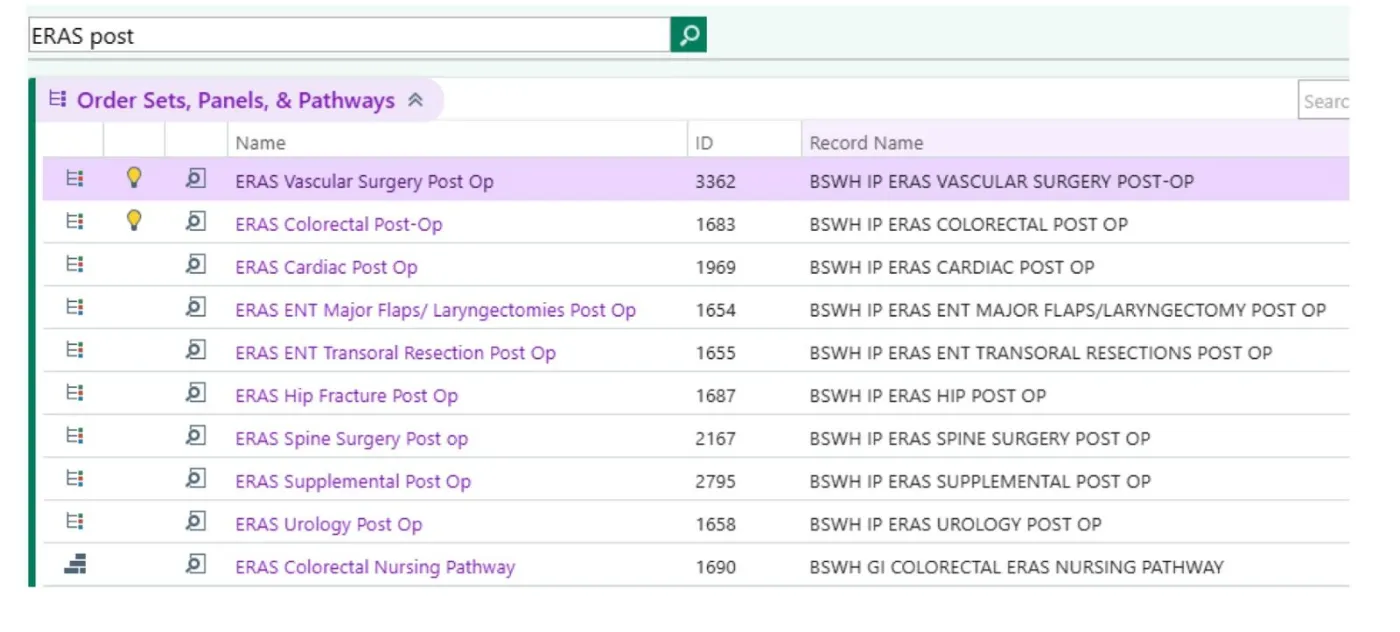
- Enhanced Recovery after Surgery (ERAS), EPIC order sets
- Conference participation expected- see section in document on Conferences
- Quality Initiatives
- Reduction in Hospital Acquired Conditions/Healthcare Associated Infections
- Central Line Associated Bloodstream Infections (CLABSI)
- Catheter Associated Urinary Tract Infections (CAUTI)
- Post-Op Wound Infections - Colon Surgery, Abdominal Hysterectomy
- Colon SSI reduction quality improvement workgroup, two barriers that were identified as high frequency and potential high impact for intervention were (1) use of clean closure trays for open abdominal colon procedures at time of fascial closure and (2) use of wound protectors for open abdominal cases when applicable.
- Clostridium difficile rates
- MRSA rates
- Sepsis Bundle Compliance
- Hand Hygiene Compliance
- Antimicrobial Stewardship Days of Therapy
- Safe Surgery Saves Lives
- Surgical Time Outs
- OR/Procedural Area Safety – Count Reconciliation, Universal Protocol adherence
- Sterilization/High Level Disinfection
- Pressure sore reduction – specifically trach ties (loose and lateral), mepilex lite,etc
Phase 4: 60-90 Days- Performance Alignment
Performance Review Template
Clinical Metrics – in near future will be able to get a dashboard from Chris Kethley. Also, you can use slicer dicer through EPIC, but we share patients so data can be misleading.
- Case volume
- Complication rates
- Readmission rates
- Length of stay
Operational Metrics
- Turnover time: Dr. Monday keeps records for EGS, but we don’t have data for trauma.
- Documentation
- Coding accuracy: Chris Kethley will be doing this with our group do it the future
Cultural Metrics
- Dr. Tox Cox
- Team feedback (360) input
- Nursing satisfaction
- Anesthesia collaboration
Surgical Privileging & Competency Template
Core Privileges Section
- Procedure list
- Case numbers and requirements
- Peer review committee: add
- Trauma & EGS reports to Surgery
- ICU (combined with pulmonary critical care)
- All peer review committees report to Professional Standards (All Peer Chairs and QI support)
- Professional Standards reports to the Committee for Professional Enhancement (All Peer Chairs)
Determination options:
1. No further review necessary
2. Initial Mentoring Effort (Informational Letters, Informational Conversations, Informal Meetings)
3. Educational Letter
4. Collegial Counseling
5. Refer to CPE (Committee for Professional Enhancement – formerly PSEC) for discussion of outcome
Surgeon Mentorship Program Template
Structure
- 6-month formal mentorship program
- Monthly clinical review
- Quarterly career discussion
Discussion Guide
- OR efficiency
- Complication management
- Leadership opportunities
- Academic development
Onboarding Checklist for new URSA Surgeons and Critical Care Physicians
Common and Shared Vision for Surgeon and Physician Success
- Personal fit within culture of community
- Employer’s business plan for surgeons and physicians including marketing and practice growth plans
- Personal goals for success
- Work-life integration
Expectations
- Practice scope, skill set, and competency to operate independently
- Proctoring guidelines, ability to request operating room assistance for complex cases and level of anticipated support
- Credentialing details for all clinical sites
- Work requirements, on-call expectations, night rotations, and post call expectations
- Details of call coverage arrangements within group
- Required number of service weeks per year, shifts per month
- Participation in clinical care pathways and protocols: such as the quality improvement program, ACS Trauma Quality Improvement Program and other registries
- Professionalism and social media policies
- Risk management evaluations
- Continuing Medical Education activities (CME)
- Attendance expected for TMPI, Trauma peer, ICU peer, URSA/ NTCC business meetings and EGS committees (50% required, but highly encouraged 100%)
- Hospital committee participation: Opportunities to get involved and may lead to leadership positions
- Professional group performance improvement activity participation
Professional Support
- Assistance with onboarding process
- Administrative support staff for clinic and OR scheduling
- EHR access, training, ongoing support at all sites
- Training in modes of communication between clinicians is important. Research support, Quality, Team Stepps etc.
- Ongoing professional development
- Mentorship and career guidance
- Business training and small business ownership
- Marketing and website support
Employment Details
- Compensation and bonus: structure, base salary, RVU targets and bonus structure
- Details of pension plan structure
- Employee benefit package: health care, disability, life, liability insurance limits etc.
- Details of health care benefits- ex. Dental, vision, mental health services etc.
- Details about health care insurance coverage for dependents
- Parental leave policies of the group
- Noncompetition clauses or geographic radius exclusion
- Termination agreement details: with or without cause, timeline
Personal support
- Local banking and loan assistance
- Health care enrollment assistance
- Financial planning and retirement coaching
- Real estate and school district information
- Surgeon/physician wellness support services
- Personal health accommodations
Call Schedules
- Attendings/ APPs URSA
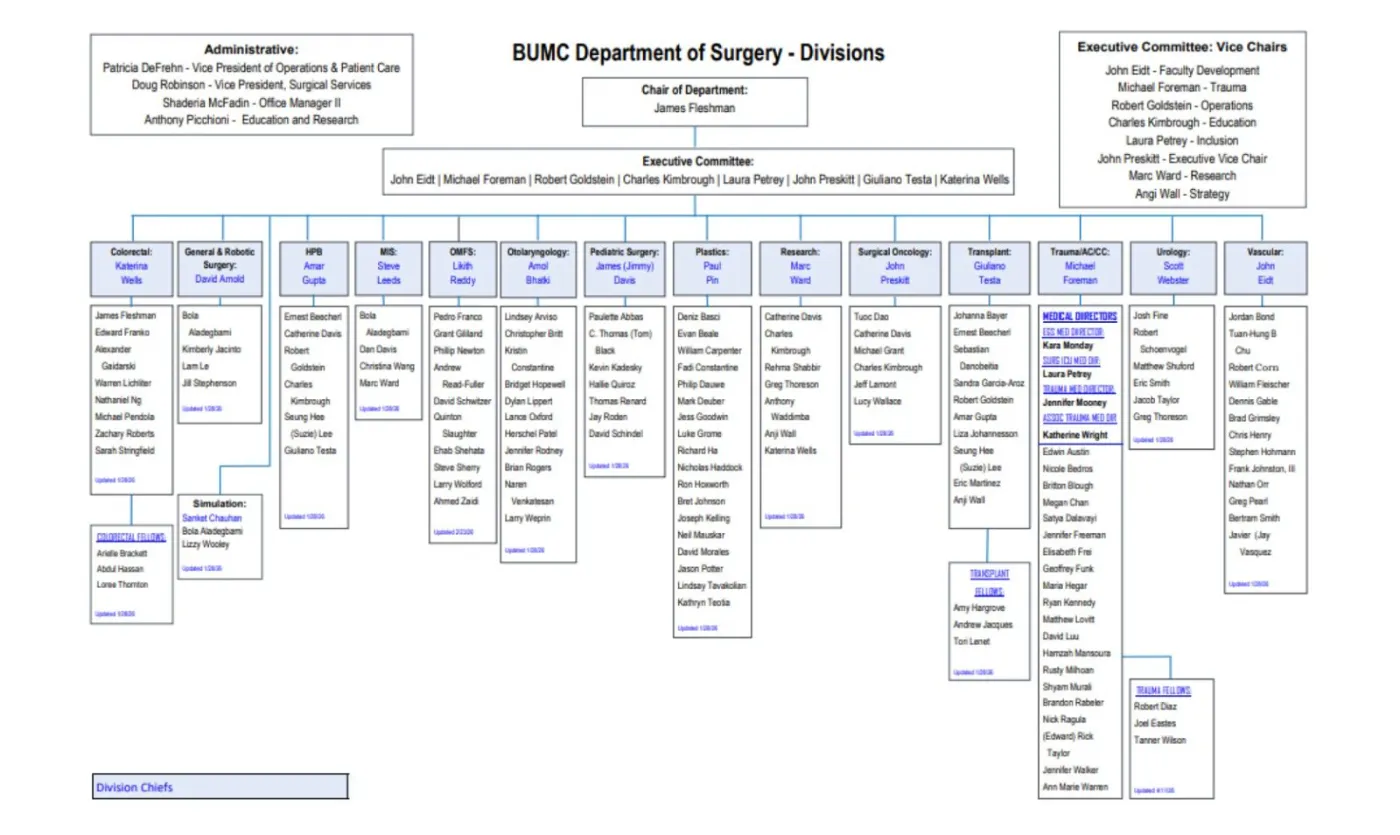
- If you make a schedule change the day before on a business day, then please let Noreisha (nhenry@ntxcc.com or call back line to office 214-821-1660) in the URSA office know. She has to update QGenda for the hospital.
- For after-hours or weekend Qgenda call schedule changes, text Noreisha (469-879-9435 during reasonable hours) and she will update the hospital Qgenda. For last-minute changes, also notify the Transfer Center (214-820-6444); if it involves a surgeon, notify the OR front desk (214-820-3734) and the ED charge nurse at (214-820-9039).
- QGenda Call Scheduled for BUMC / BAS
- Surgical Critical Care Fellows: Call schedule for fellows is on Sharepoint, please remind Wendy Shelley or Dr. Petrey to add you. Future project, adding it to ShiftAdmin.
IT & Systems
EPIC
EMR access requested – EPIC
Epic is the electronic health system used in Baylor Scott & White hospitals and clinics
How to verify EPIC Access on a PC
EPIC optimization – set up
- PEP Visits (*CME Available) PEP Visits
- 2 hours and 45-minutes afternoon session to go over recommendations for Epic efficiencies
- Increase Provider Satisfaction with Epic EHR
- Improve Epic Workload Metrics in Self-Directed Efficiency Evaluation
- Improve utilization of Epic tools that allow for faster documentation and information access
- Improve knowledge of Epic system and available advanced training opportunities
- The program is beneficial for providers that have 3 or more months of experience
- For more detailed info on the PEP Visit, view the Engagement Agreement
Dragon Medical One dictation
Haiko or Canto (mobile epic for smartphones and iPad/ tablets)
Link to Epic for PC:
Link to BSWConnect: https://home.bswhealth.org/
Other IT Necessities
PACS access:
TEG Manager
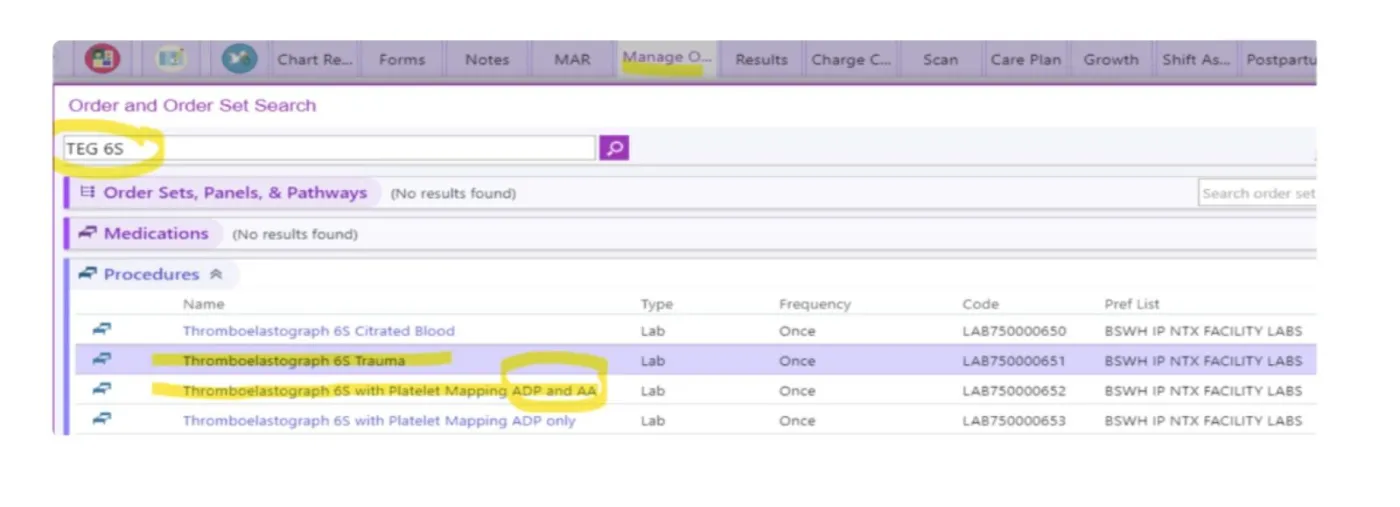
Visage client access
- Faster than EPIC to see images
- Shyam Murali, MD can help get you access if you desire
Baylor email
- Important emails from med staff, EGS trauma/ ICU updates
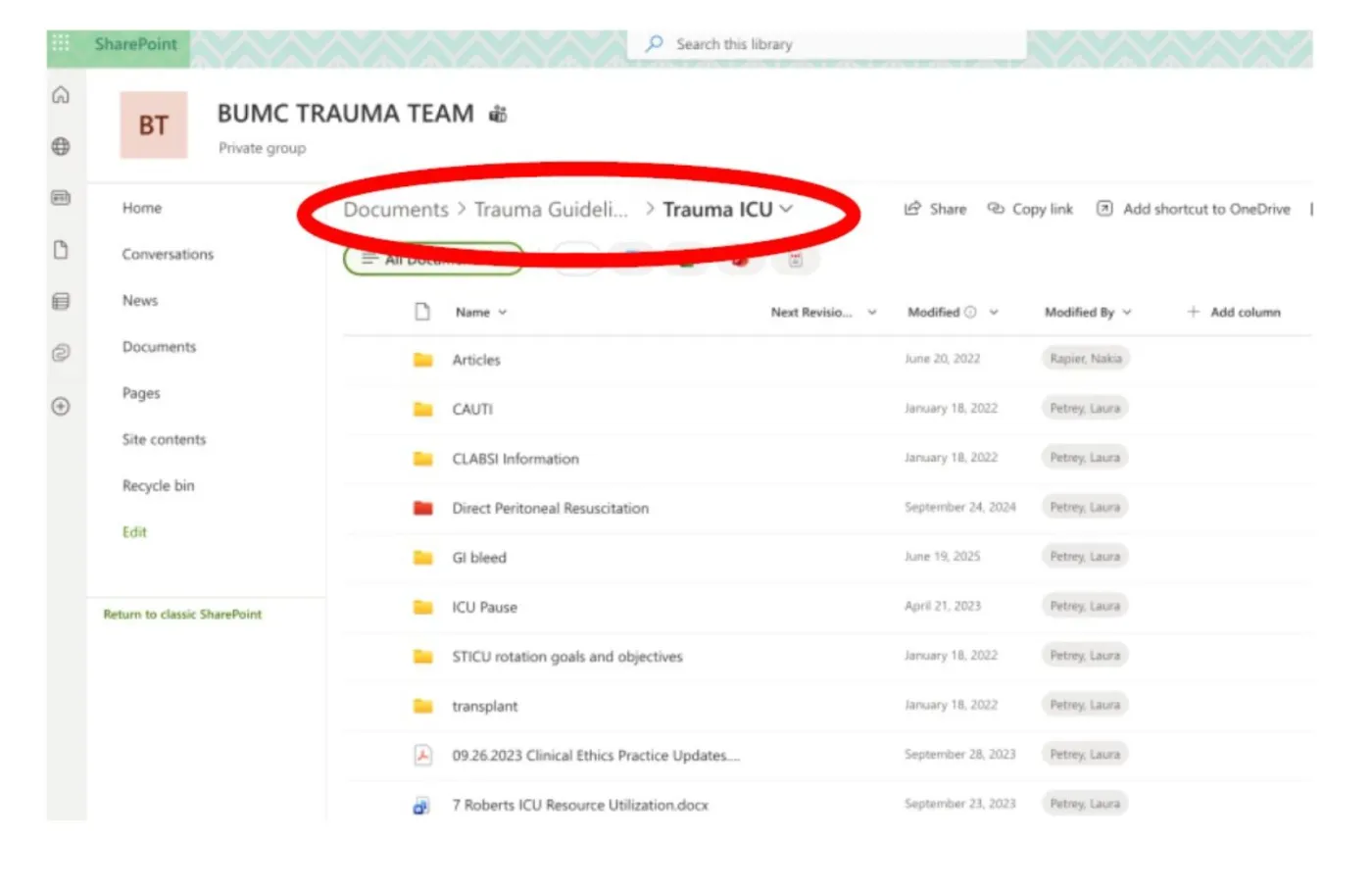
Sharepoint:
- Trauma and ICU guidelines found on BSWConnect Sharepoint
- Once have Baylor email, can get access from Trauma Program Coordinator, Dawn Mckeown or Drs. Jennifer Mooney and Laura Petrey
- BUMC Trauma Team on Sharepoint
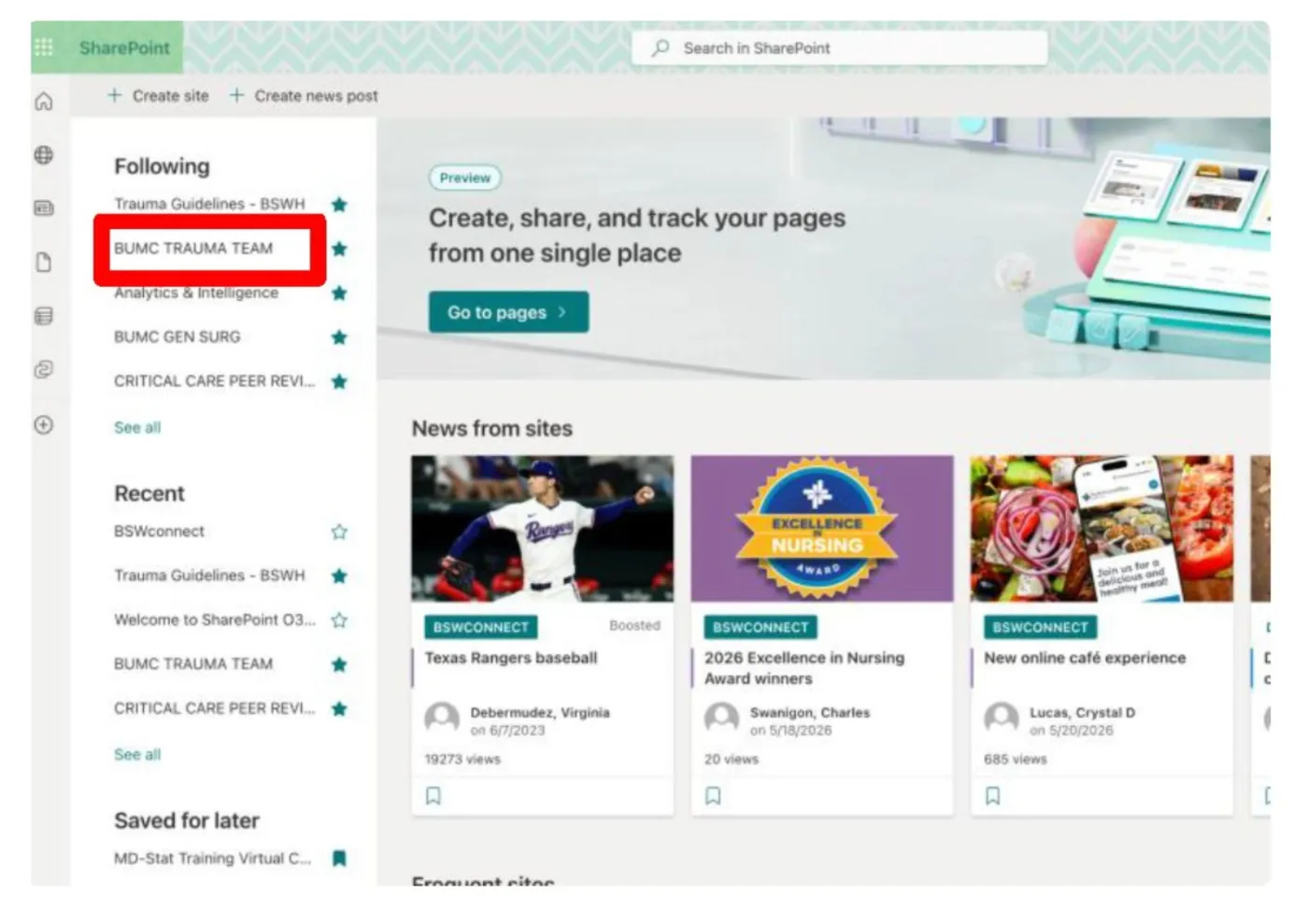
- Click on BUMC Trauma Guidelines box
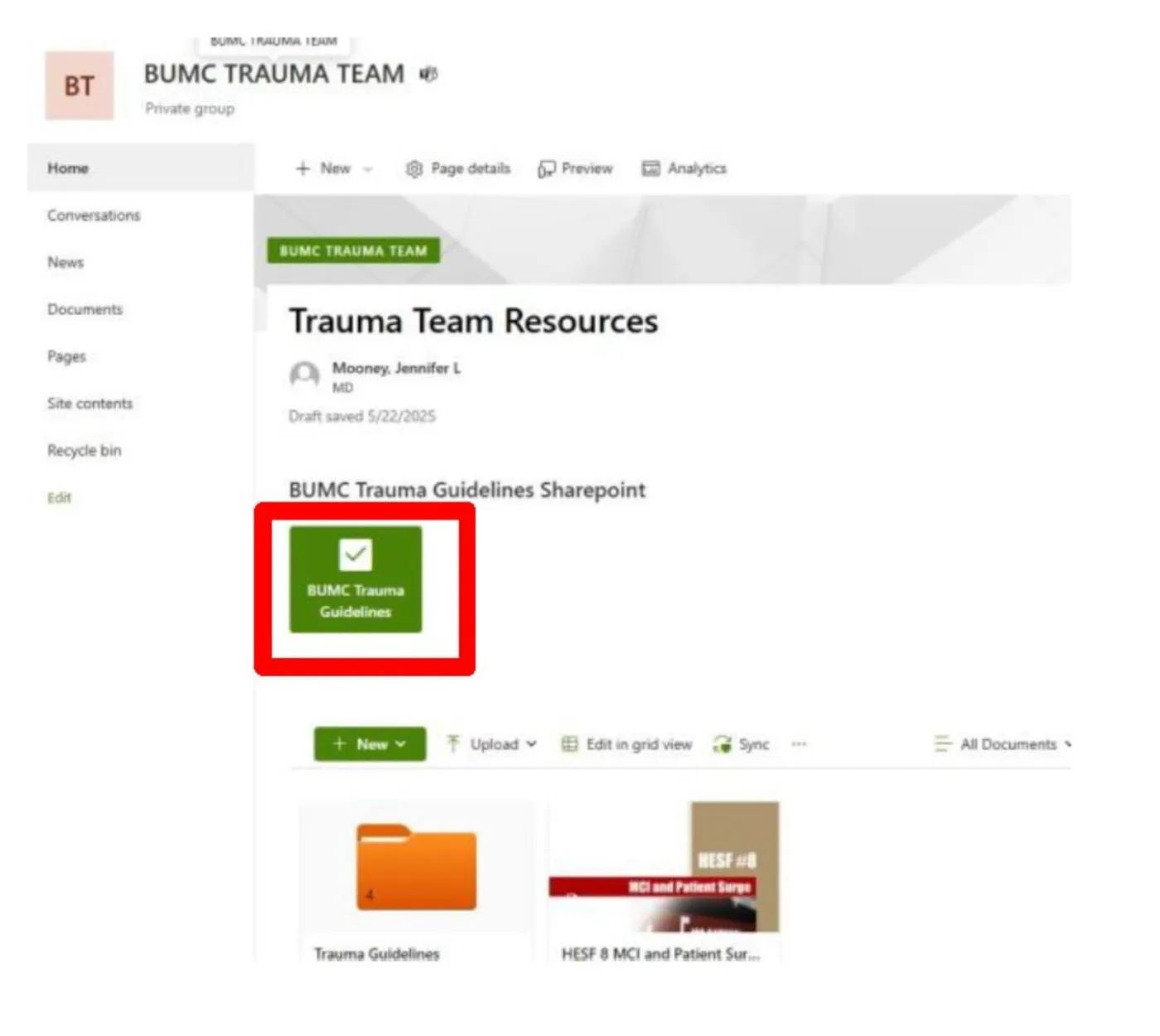
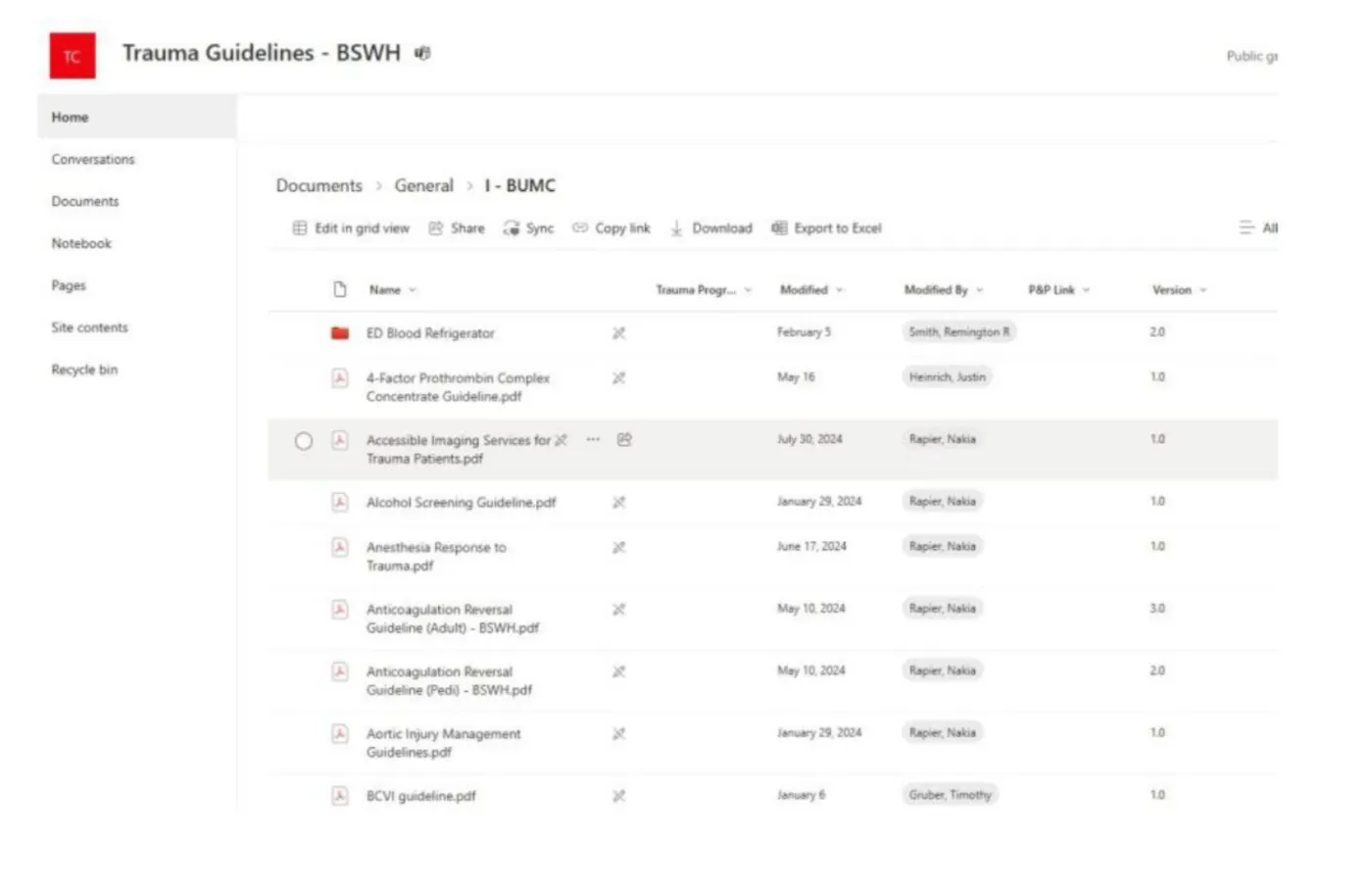
- Click on box for Trauma ICU
NTCC email
- Madeline Wade or your assigned medical assistant can get set up through our IT people
Secure messaging setup for our group
- Download Telegram if not already using and Dr. Lovitt or another can add you to physician & group messaging (NTCC, UrSA Surgeons and Docs)
Everbridge
- Notifications for Trauma activations and disasters
- email Trauma Program Coordinator, Dawn Mckeown, change status to get MCI and not just fires and tornados
- As long as you're logged into your ntxcc gmail, you can see all contacts
- Please add any new contacts to share with others
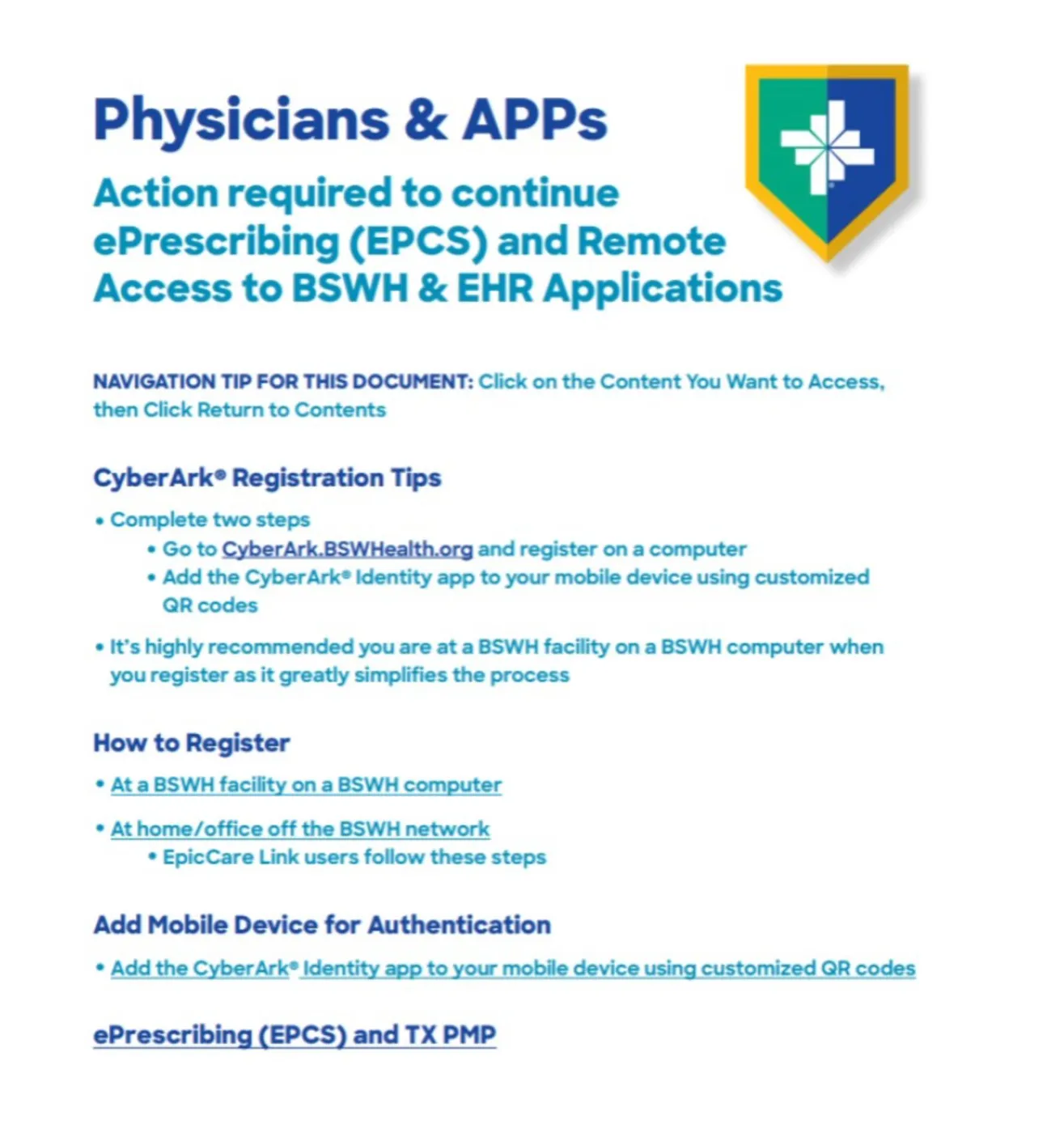
Idira Identity (formerly CyberArk) for e-prescribing
Parking and Badge Services
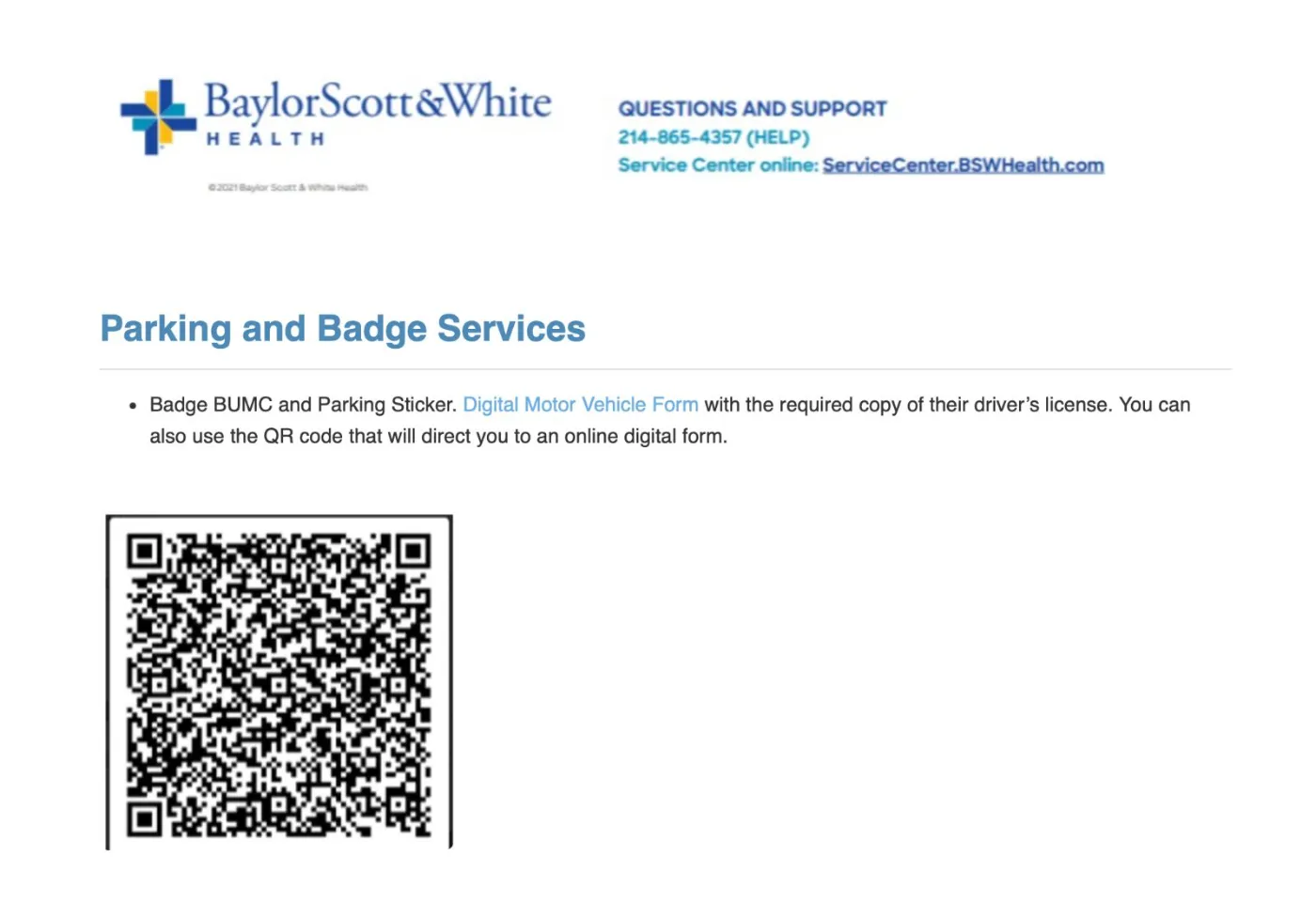
Need a parking decal/sticker?
- Employees with a Baylor login will need to use the Digital Motor Vehicle Form with the required copy of their driver’s license. You can also use the QR code that will direct you to an online digital form.
Needing a badge for the first time?
- Baylor University Medical Center Parking Services Office
- 3600 Gaston Avenue - Barnett Tower, suite 1130A
- Office Hours: Mon-Thurs 8:00 am – 4:00 pm
- Badging offices are closed on Fridays at each location.
- Closed for Lunch 11:00 am -11:45 am
- Have your direct supervisor or above email Parking@BSWHealth.org and include the following in email:
- Subject line: Please always include the campus you are referring to in the subject line
- Legal first and last name
- Contact number
- Department or Agency name (if partner)
- Details of your request (e.g., expired badge, additional access needed, desired campus location)
- Name of the/your department manager approving access
- If have any issues with parking sticker, badge access, contact at India.Walker@BSWHealth.org or Esther.Perez@BSWHealth.org
- Badge access for THH Dallas: ***
- Badge access for THH Plano: Jennifer Luna, Manager Medical Staff Services or Deann Keesling, Manager Medical Staff Service
- Badge access for quick sign on computers if not already set up for you (call IT at 214-865-4357 and submit request to be approved by Marshada Henderson in Med Staff)
- Badge access to BUMC physician lounge, trauma offices, ICU 7R workroom, 7R storage room access, ( India.Walker@BSWHealth.org or Ester.Perez@BSWHealth.org
- Obtain parking stickers from the URSA office to park in the URSA parking lot, or you will get a ticket. Can be obtained from Madeline Wade or other office medical assistant
- Garage 3 is under the Pickens Cancer Center, Enter Junius St and turn left on Pauline St and immediately turn down into the parking garage
- Park in the spaces marked with the Hyena stickers in the first row down on left after wall in middle and the first turn right around pole there are more spaces on the left and right.
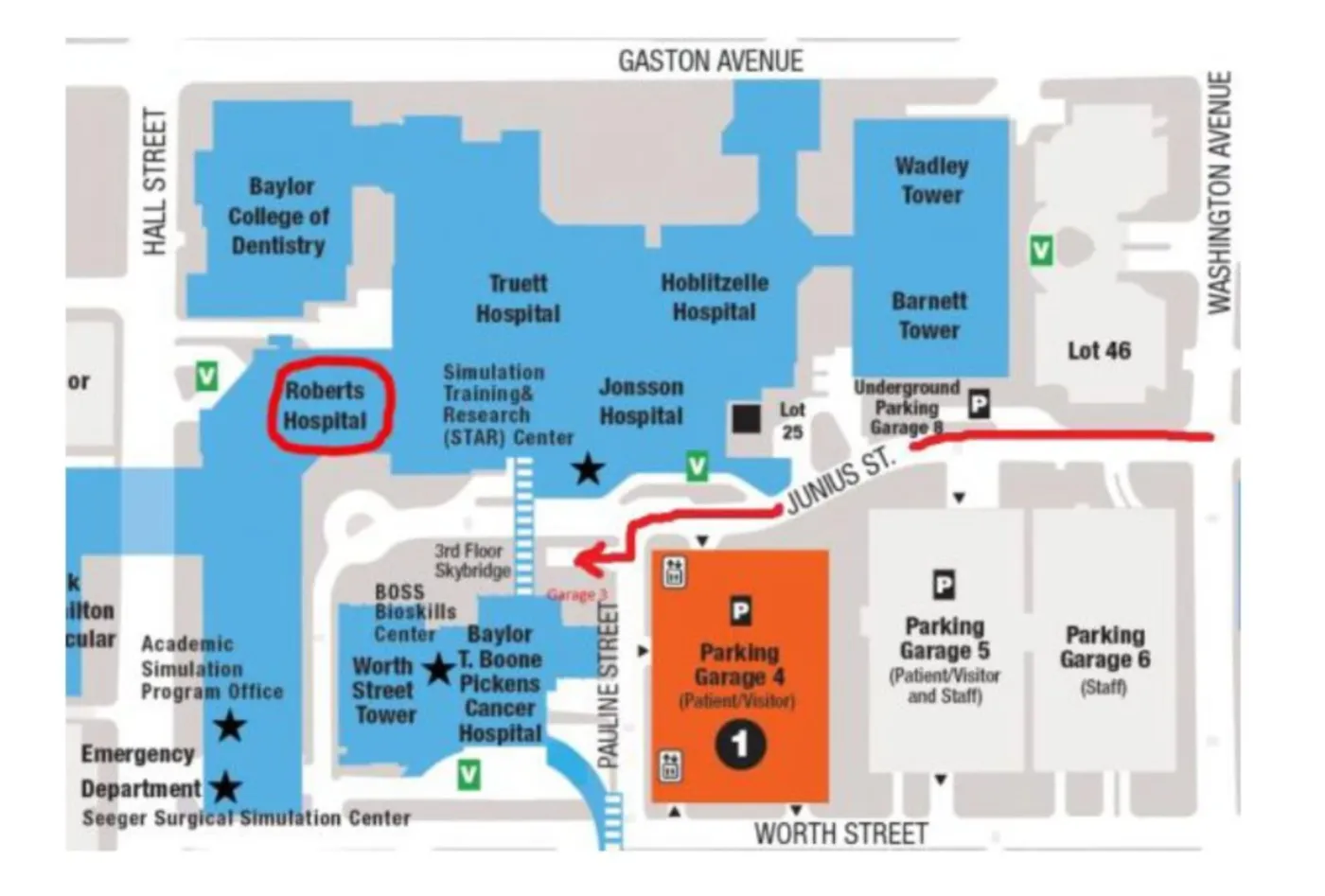
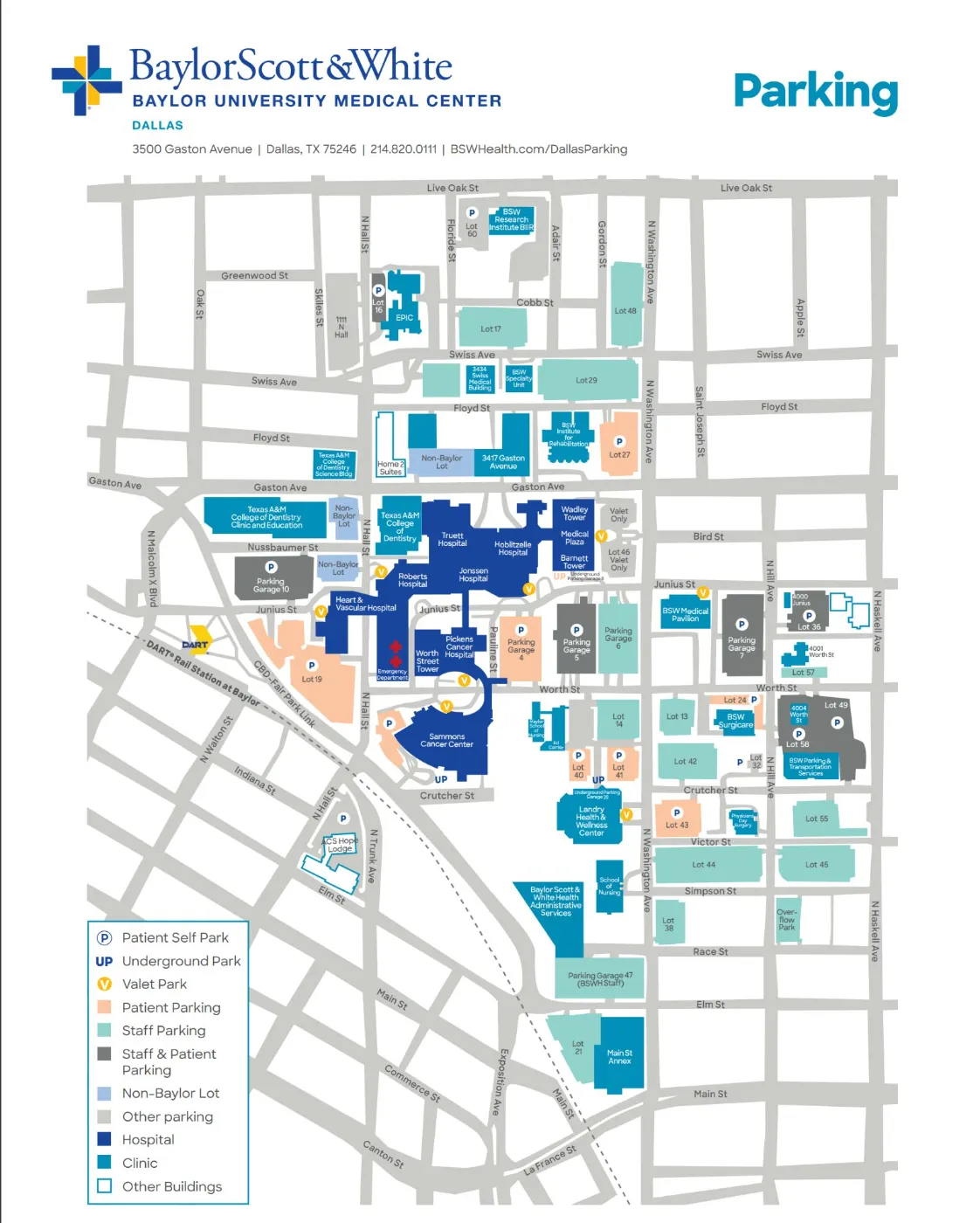
How to get to URSA/NTCC call room
- Enter Pickens building from parking garage, go to 2nd floor and look for C2.336 On-Call Rooms, door code 911
- 2 call rooms, conference room, workroom with Fridge
- Call Room Bathroom 2 Pickens (Private C2.337), code 7896
- Women’s bathroom down the hall to the left going towards the OR on 2 Pickens, code 5862
- 4 Roberts Call Rooms (2)
- Located by hallway behind the ECMO desk.
- Key located in 1st cabinet in the 4 R low workroom
How to get to the CVICU / NTCC work rooms
- 4 Roberts High Workroom, CVICU; R4.422 room number
- 4 Roberts Low Workroom, CVICU; R4.429 room number
- 7 Roberts Workroom, STICU; R7.129 room number
- Badge door access, if not set-up, Antionette.Stewart@BSWHealth.org can help
- 6 Truett Workroom, Surgery Floor
- Caddy corner across from nurses' station, no room number
- 7R staff bathrooms 3200
- 7R supply room 3200
- 4R supply and Most Rooms 3256
- 4R Workroom low side 3255
- Trauma Conference Room 4355
Conferences/ CME Funds
BERA (Business Expense Reimbursement Account) through IES using the Concur app
- Annual funds to be spent on license renewals, DEA registration, board certification fees, Professional society dues, CME, conference hotels, etc.
- Annual Funds do not roll over
White Coats/ Jackets
- White Coats ordered by URSA / NTCC, usually office manager or other delegates.
- Black Jackets group orders done per ICU APPs intermittently or can buy from website and pay for embroidery (Figs)
- Can submit for BERA (Business Expense Reimbursement Account) through IES
Surgeons
- Robotic sign in/update with Intuitive or contact rep, currently Ben Knighton, 469-744-9940
- Contact for rib plating OR front desk
Day to Day
- 0630 / 1830 ICU sign-out for APPs/ residents in workrooms
- 7 AM sign-out for Trauma/ EGS and SICU attending encouraged to attend, Sparkman Conference Room, 2 Pickens. Fridays in Trauma Conference room
- 7 AM ICU night attending signs out to day team usually in URSA call room, 2 Pickens
- 9 AM ICU Multidisciplinary rounds
- 4 Roberts high and low
- Heart Failure and Pulmonary rounds make with each side
- 7 Roberts
- Transplant patients always go 1st
- MWF start at 701
- T,Th start at 723
- S,S dealer’s choice
- Floor patients
- Rounds are made with the attendings for trauma, EGS blue and gold, no specified time
- 11 AM case management/ disposition meeting 6 Treutt, attending encouraged to attend, but not mandatory
- ? Time case management/ disposition meeting 15 Roberts – with construction on the Roberts, this had stopped since spread out everywhere
5 PM signout for attendings for EGS and trauma in URSA call room, 2 Pickens
7 PM one person from day team ICU stays late which will be assigned in ShiftAdmin
Staffing model
- Day shift:
- 1 Trauma Surgeon, 2 EGS surgeons 7-5 AM
- 4 Roberts high and low
- 2 APPs, +/- SCC fellow or pulm crit fellow + 1 dedicated NTCC MD per side
- 7 Roberts high and low
- Usually 3 providers (APPs, residents), SCC fellow
- Occ pulm crit fellow – when that happens, the SCC and pulm fellow split the unit
- 1 Attendings for each side
- THHD ICU
- THH Plano
- Night shift:
- Trauma/ EGS Attending 5P - 7A
- 4 Roberts and 7 Roberts covered by 1 night attending 7P – 7A
- THH Dallas
- covered by day ICU attending, home call
- 1 APP
- 4 Roberts
- 7 Roberts
- 1 APP or R3 surgery resident or R2 EM resident
- Phones
- APP Phone 1 will be used 24/7: 817-922-1001
- APP Phone 2 will be used by the 2nd APP during the day only. Any resident on their second rotation through the ICU can also take Phone #2.
Charting
- Make sure that you’re logged into the right CONTEXT before you chart and bill on anyone!!!
- ICUs: Y DSH BUMC NTCC
- Surgery: Y DSH BUMC URSA
- Dallas THH: Y DSH THH NTCC
- Plano GS: Y PLH HHP URSA
- BAS URSA: Y FWH BAS URSA
- BAS ICU: Y FWH BAS NTCC
- Add the following dot phrases to your faves
- .ntccconsult – steal from Dr. Mooney or Sheila Razmzan
- .ntccprogressnote – steal from Dr. Mooney
- .ntccICUPause – steal from Coker
- Perc trach - . PERCTRACH - Mooney
- PEG - PEGCOSURGEON – Mooney
- PEG signoff note - .EGSPEGSO - Monday
- Gold EGS H&P: .GOLDEGSHP - Monday
- Gold progress note: .GOLDEGSPROG - Monday
- Blue EGS H&P: BLUEEGSHP- Monday
- Blue EGS progress: BLUEEGSPROG – Monday
- BUMCTRAUMAHP
- BUMCTRAUMAPROGNOTE
Billing
- Critical care time: bill 99291 for up to 75 mins, 99292 in addition for 75+ mins
- If doing an H&P / initial consult and NOT billing critical care time,
- Moderate decision making: 99222
- High decision making: 99223
- Subsequent visit without critical care time: 99232 (H2) or 99233 (H3)
- Moderate complexity charge 99232 - .MOMMDM - Mooney
- High complexity charge 99233 - .HIGHMDM - Mooney
BILLING BASICS (Rick Taylor)
In general, try to think like a family practitioner (everything is complicated to them)…
So, our patients are nearly always SUPER-complex: many injuries, have an acute surgical disease process and therefore might need an operation (simple to us, but scary to other doctors), often have multiple comorbidities, etc.
Be sure you date and time notes, especially when documenting after midnight for a service provided before midnight. For example, “I saw the patient with the resident, etc…” is somewhat ambiguous, whereas “I saw the patient with the resident on [date] at [time] (before midnight) …” is billable the date before midnight. Alternatively, one can create an empty H&P, Trauma H&P, or other document, change the date & time to before midnight, state “I saw the patient on [date] at [time]. Please see the [document] created after midnight on [date] at [time].”
ED CODES
ED Visit (ED, 9928x): evaluated in ED and goes home or we sign off
ED Consult (EDC, 9924x): we’re consulted in ED, gets admitted to someone else, we follow
For “x”, use the same levels 3,4,5 pattern as consults (see below)
ADMISSION / INITIAL EVALUATION (A), CONSULT (C) CODES
A1, C3, ED3: 4 HPI, 1 MFS hx, 2 ROS, 12 exam (2 organ systems), simple dx, low risk
A2, C4, ED4: 4 HPI, 3 MFS hx, 10 ROS, 18 exam (9 organ systems), multiple dx, mod risk
A3, C5, ED5: 4 HPI, 3 MFS hx, 10 ROS, 18 exam (9 organ systems), extensive dx, high risk
Our H&P document was designed to always support A2/C4 or A3/C5 level.
A1 should be unusual.
C3 for simple bedside access to I&D, C3 for peg OR trach (peg AND trach should be C4).
Taking someone to surgery with additional medical problems (CHF, COPD, PNA, obesity) should bump it up a level. Attendings remember to add a 57 modifier for “decision for surgery”.
C1, C2: 1 HPI, 1-2 exam, minimal thought required (not used if a real H&P is done)
(ED1, ED2) e.g.: (ortho) – “Asked about finger pain. Finger looks fine, xray shows no fx.”
(EDC1, EDC2) These should almost never be used in our practice - more for Ortho, or
Urology (“urinary retention -> will place Foley”).
ROUNDS (H) CODES (following previous admit or consult)
H1: 1 HPI, 1 exam, simple dx, low risk (should rarely be used)
H2: 1 HPI, 1 ROS, 6 exam, multiple dx, mod risk
H3: 4 HPI, 2 ROS, 12 exam, extensive dx, high risk
PO: Post-op code must be used after surgery in straightforward situations. If we are actively managing a separate diagnosis (e.g. TPN, tube feeds for malnutrition, abx for a different infection than the surgery was performed for, head injury issues, PT for extremity fractures, chest tube, entero-cutaneous fistula) then we can and should bill for that using the “H” codes above with a 24 modifier, but these need to be explicitly documented (best if mentioned by the attending/NP rather than relying on the residents). This code should never be necessary/used in NTCC billing, as NTCC does not do surgery.
Technically, we are only supposed to bill for the things that WE are actively managing OR SUPERVISING that day, which includes supervising physical therapy, “disposition planning” (waiting on social work), TPN or tube feeds, treating their hyperglycemia with SSI,… ANYthing that the hospital people are doing on our behalf (that we are signing the orders for). Furthermore, if they are only admitted for a wrist fracture but Ortho has signed off, then they are stuck on our service and we can take credit for their care every day. We just have to document things:
e.g.: Elderly, lives alone, wrist fracture, struggling with PT, can’t do ADLs, needs SNF/rehab (awaiting arrangements)… that’s more than 2 problems already (A2 / H2), and THEN add on HTN, DM, dehydrated, hypoNa, delirium, etc… EASILY gets us A2 / H2 (or an A3 / H3 if well-documented).
C1, C2 (ED1,2 / EDC1,2) should almost never be used in our level / type of practice.
A1, C3, H1 levels should rarely be used in our practice – only if someone is perfectly fine and you can only find ONE diagnosis for them.
A2, C4, H2 and A3, C5, sometimes H3 levels – these should be our most common codes.
Evaluating an emergency surgical condition is always at least a “moderate” (level 2) situation.
According to CMS rules, ANY type of IV medications (narcotics, antibiotics) or PPN / TPN that we prescribe get us an automatic “high risk” (A3, C5, H3) as long as the other elements (history and exam) are documented.
We tend to under-estimate (under-bill) these things because even complex patients seem simple to us (remember, think like the “average physician” – a family practitioner), and out of fear of prosecution / persecution (audit, fraud), but just like the IRS & taxes – if it is well-documented, then they cannot nail you for it.
You can/should bill each day for pain management (example = G89.11 code), and unsteadiness on feet (R26.81) on nearly every trauma patient, and sometimes (rarely) general surgery patients.
DISCHARGES (DC1, DC2)
Mostly DC1 codes (up to 30 minutes); very rarely do we invest more than 30 minutes of OUR time working on a discharge.
We cannot bill for discharges after surgery for most general surgery cases.
However, you can/SHOULD bill a hospital visit code on the day of discharge, just like any other day, when you have previously been billing “H” codes with 24 modifiers each day for that patient.
ZERO-DAY GLOBAL PAYMENT PROCEDURES
PEG, trach (not much point in billing them for 1st post-op check, but…) – if there are any post-op problems, then we can and should bill for the management of the problem (leaking, bleeding, dislodgement, infection).
chest tubes – bill EVERY DAY for their management
debridements – bill EVERY DAY for treating the patient’s wound – e.g. with VAC therapy – H1
CAN (and should) bill for VAC changes if done without the hospital “wound care RN” there, and when done in the clinic.
“Complex I&D” = 10061, DO bill for post-op care (but not “simple I&D” = 10060)
bronchs, EGDs, thoracentesis, paracentesis, other simple bedside procedures have no “global”
RE: DAILY NOTES
Synthesis of information to formulate a treatment plan is very important to clearly articulate:
Diagnosis -> subjective info -> objective into -> synthesis (“what I am thinking”) -> plan (“what I am doing about it”). So...
Dx1: S -> O -> A -> P,
Dx2: S -> O -> A -> P is easier for the payors to interpret than the old-fashioned SOAP note.
However, do not clutter it up with lab values, etc. These data will be in the “labs”, etc sections.
The “what I am thinking” and “what I am doing about it” are the important factors.
e.g.: Acute kidney injury -> worse today (BUN & Cr higher), seems dehydrated -> bolus 1L NS -> monitor.
MYTHOLOGY
“If the nurse is managing it, then you are not.” That is NOT true… the “providers” have created protocols to manage these things because no one else can do anything without “a doctor’s order” – therefore, the bedside nurses ARE following OUR orders, and WE are taking responsibility (and liability) for THEIR actions.
Examples also include working with physical therapy, TPN/PPN/tube feeds (written by the dieticians, but we are required to co-sign their orders because they have to come from a physician, so we are taking responsibility for them), sliding scale insulin (probably would not try to bill for SSI in isolation, but if the patient is indeed very hyperglycemic and we are working to fix it by increasing NPH/Lantus or other meds, then WE are making a move and it is totally valid – remember “think like a family practitioner”).
RE: extubation: There DEFINITELY is “potential for imminent demise” associated with extubation, so this IS critical care.
“BiPAP” definitely IS mechanical ventilation (even if non-invasive) – “respiratory failure” that they could not survive without mechanical support, so it can be billed as such (critical care).
BODY SYSTEM FAILURES (for critical care billing)
“A critical illness OR INJURY acutely impairs one or more vital organ systems such that there is a high probability of imminent or life-threatening deterioration in the patient’s condition.” (directly from the book). Most TARTs therefore qualify for this while in the ED!
Neuro – any type of head bleed, “encephalopathy” (acutely failing brain function)
These codes start with “S” for trauma patients.
I see a lot of “I” codes for head bleeds – these are strokes, not TBIs.
Cardiac – shock (any type), acute AFib or other arrhythmias,
hypertensive emergency (SBP > 180) especially if requiring IV meds to control
Respiratory – invasive or non-invasive mechanical ventilation
extensive blunt chest trauma, most penetrating chest trauma (“imminent threat to life”)
NOTE: there is a special code (starts with “S”) for traumatic hemo-/pneumo-thorax.
Liver – “acute liver injury” (for shock liver, or badly traumatized liver)
Renal – “acute kidney injury”, or “AKI on CKD” (exacerbation of CKD) that you are doing something to manage (e.g. IVF hydration -> monitor). It does not have to be difficult.
Bleeding – hemorrhage (trauma, post-op, GI bleeds) is sometimes “an immediate threat to life” (for example if the patient requires transfusion in the Trauma Resus Room, or has to go to OR, IR, or endoscopy as a result), as long as that it clearly stated in the provider’s documentation.
SHORT AND BILLING CODES:
A1 99221
A2 99222
A3 99223
H1 99231
H2 99232
H3 99233
C3 99253
C4 99254
C5 99255
ED3 99283
ED4 99284
ED5 99285
EDC3 99243
EDC4 99244
EDC5 99245
PO 99024
D1 99238
D2 99239
CC1 99291
CC2 99292
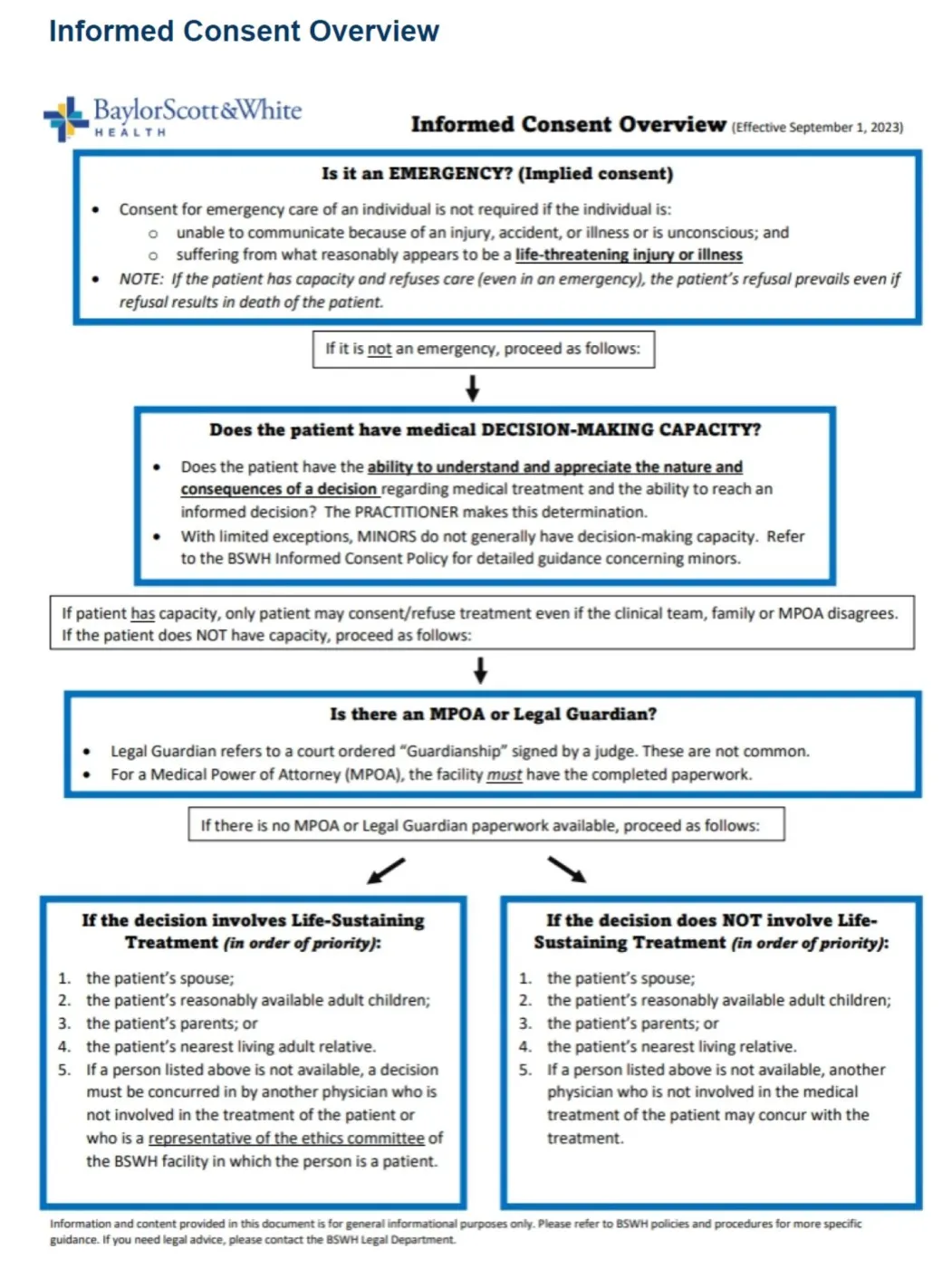
Informed Consent Overview
For more information, go to this powerpoint: (if need access, email Laura.Petrey@BSWhealth.org)
TADA and Informed Consent Ethics Updates 2023
Ethics Consult Process
Ethical questions may arise when a patient has lost capacity to make decisions, values collide or there is a perceived burden vs. Benefit of a medical treatment. A clinical ethics consultation is provided when there is a conflict or concern as to what constitutes good patient care. During consultation, the goal of the consultation is to:
- Assist the patient, family, or treatment team to work through the decision-making process with the intent to determine what treatment option, discharge plan, or long-term goal should be implemented.
- Help staff come to an agreement as to what care plan will promote the patient’s interest and the staff’s sense of professional ethics.
- Resolve the conflict that has arisen between a patient, their family, and the healthcare team.
Patients, families, and any member of the healthcare team may request an ethics consult. This includes comprehensive care managers, chaplains, physicians, and nurses. How to contact the ethics team can be discussed with the hospital CCM department manager.
Contact: Mark Casanova, MD, Office 214-820-9248 Cell: 972-897-5479
Chaperone Policy new 2026 BSW
Change Impact Summary: Chaperone Policy
Who
All Ambulatory, Inpatient, and ED
What
A new systemwide Chaperone Policy is being implemented to establish clear expectations for the use of chaperones during sensitive examinations (breast, pelvic, genital, rectal).
- Documentation of presence or absence of a chaperone is required for all sensitive exams.
- Chaperones are not required for emergent or routine care involving sensitive areas (e.g., EKG placement, catheterization, imaging, or newborn exams).
- Full policy will be posted soon
Why
This includes a standard approach to when a chaperone is required, offered, and documented across ambulatory, ED, and inpatient settings.
Risk
What happens if this change is not adopted:
- Increased legal, regulatory, and professional liability for providers and the organization
- Inconsistent practice across clinics leading to confusion, complaints, and loss of patient trust
- Missed or incomplete documentation increases risk exposure during audits, investigations, or claims
Key Takeaways
Checklist for leaders:
- Review the chaperone policy to ensure understanding
- Ensure staff and providers are aware of and understand the new chaperone policy
- Enforce compliance of the new policy
Codes
Code blue
- IM residents cover hospital, not needed in the ICUs but they show up
- Code 4 Roberts
- Recent sternotomy within 10 days, prepare for CALS
- Assess for epicardial pacing wires and functionality
- Strip CT to relieve any potential tamponade
- VA ECMO candidate? call ECMO physician on call
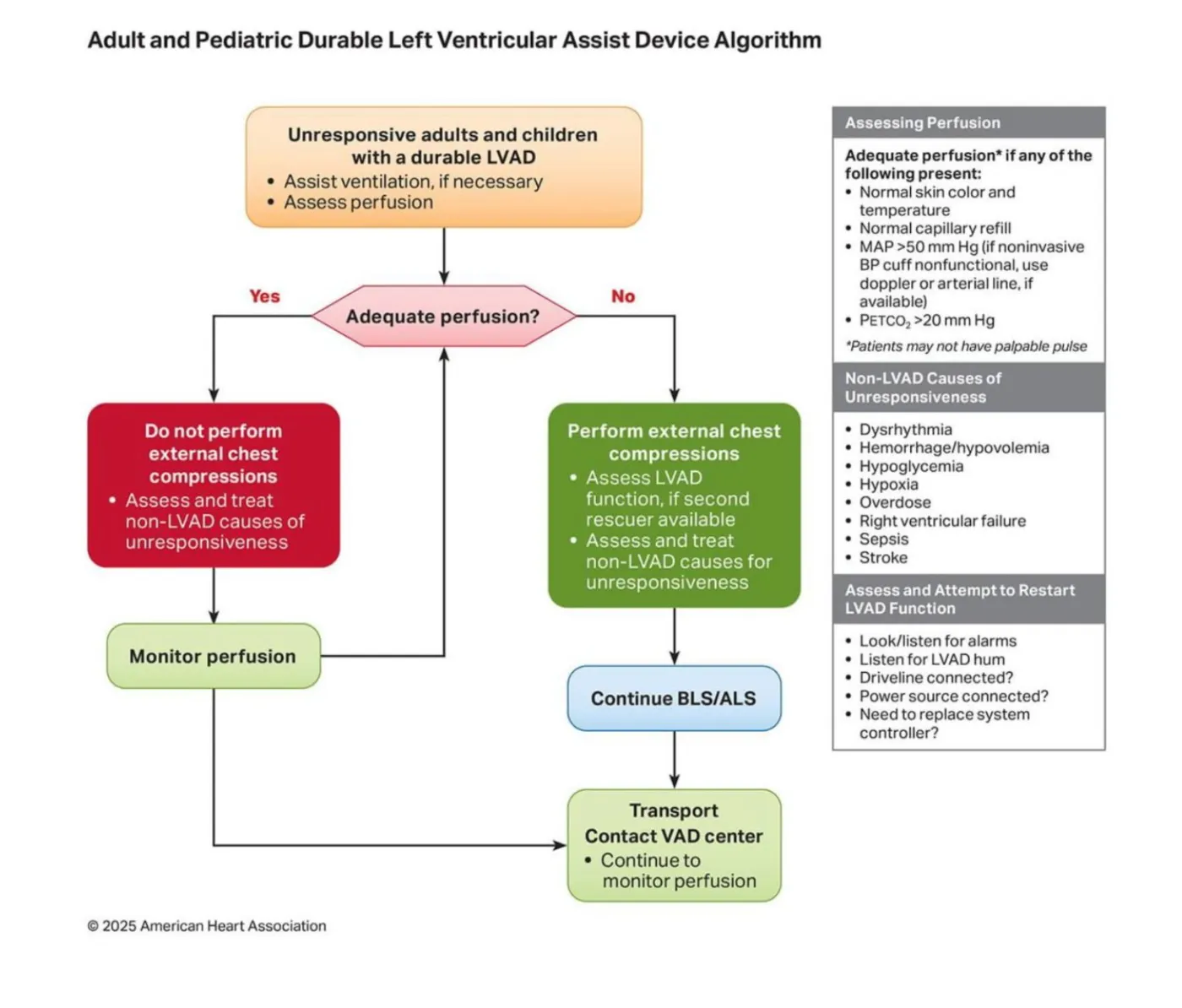
- Patient w/ LVAD
- Can you decrease speeds by 200 RPMs and give volume to achieve flow
- Concern for RV failure? Epi push or gtt to help facilitate flow R to L
- Notify heart failure attending
- Initiate ACLS, CALS, VA ECMO as necessary
Code on patient with LVAD
Code on patient with Impella
- Can you decrease the P level by 2 and give volume to achieve flow
- Concern for RV failure? Epi push or gtt to help facilitate flow R to L
- Notify heart failure attending
- Initiate ACLS, CALS, VA ECMO as necessary
Code on patient with IABP
1. Initiate Standard ACLS Immediately
- Begin high-quality CPR immediately.
- Defibrillate shockable rhythms per ACLS protocol.
- Administer medications per ACLS guidelines (epinephrine, amiodarone, etc.).
- Secure airway and optimize oxygenation/ventilation.
- Evaluate reversible causes (Hs and Ts).
Do not delay CPR because the patient has an IABP.
2. Assign One Team Member to the IABP
A knowledgeable provider, nurse, or perfusion specialist should focus solely on the pump.
Immediate Questions
- Is the pump triggering appropriately?
- Is augmentation present?
- Is inflation/deflation timing appropriate?
- Are there active console alarms?
- Is there blood in the helium tubing?
- Is the arterial waveform adequate?
- Is synchronization functioning properly?
IABP Management During CPR
If the IABP is Functioning Normally
In most cases, leave the IABP ON during CPR.
- Continue 1:1 augmentation if possible.
- The device may improve coronary perfusion during low-flow states.
- Many pumps can trigger from arterial pressure during cardiac arrest.
If Timing or Triggering is Erratic
Consider changing trigger modes:
- ECG trigger → Pressure trigger
- Pressure trigger → Internal trigger
Some consoles allow an internal fixed-rate trigger mode (commonly around 80 bpm) during arrest situations.
If the IABP Appears Malfunctioning
Stop the pump and place on standby if any of the following occur:
- Suspected balloon rupture
- Blood visible in helium tubing
- Severe gas leak
- Console failure
- Concern for catheter damage or aortic injury
Follow institutional or manufacturer protocol regarding clamping and urgent device removal.
Important Arrest Considerations
Pulseless Electrical Activity (PEA)
PEA arrest is common in severe cardiogenic shock.
Rapidly evaluate for:
- Cardiac tamponade
- Massive myocardial infarction
- Hypovolemia
- Right ventricular failure
- Tension pneumothorax
- Aortic catastrophe
Bedside ultrasound/echocardiography is highly valuable.
Ventricular Tachycardia/Ventricular Fibrillation
- Defibrillate normally per ACLS.
- The IABP usually does not need to be stopped.
- Reassess synchronization after defibrillation.
Loss of Arterial Waveform
Potential causes include:
- True cardiac arrest
- Severe hypotension
- Catheter migration
- Line disconnection
- Aortic occlusion
After Return of Spontaneous Circulation (ROSC)
Immediately reassess:
- IABP position
- Augmentation quality
- Trigger synchronization
- Limb perfusion
- Hemodynamics and lactate
Consider escalation of support if needed:
- Impella
- VA ECMO
- Emergent cardiac catheterization
- Surgical intervention
Code E-CPR/ ECMO
- ECMO specialist notified and then notify us (ICU attending, usually low side)
- ECMO will show up with LUCAS and all necessary supplies to cannulate
- ECMO specialists will have the on-call ECMO schedule.
- APP roles
- Place LUCAS if patient has not had a recent sternotomy
- If sternotomy in last 10 days, run CALS rather than ACLS
- Ensure someone is obtaining an arterial stick for hard stops
- Hard stops: ABG PaO2 < 50, O2 sat < 75%, lactate > 16, pH < 6.9, base excess < - 14
- Hard stop Out of Hospital: pH < 7.0, base excess < - 14
- Hard stops do not apply to hypothermic patients
- Exclusion criteria: DNAR, terminal disease, severe MOSF, unknown downtime, > 10 min downtime w/o CPR, asystole or suspected or confirmed poor functional status
- Exclusion for hypothermia: asystole, K > 9, central venous or arterial pH < 6.9, disease w/ predicted survival < 1 year, suspected or confirmed poor functional status-
- Help crowd control, getting tray at end of bed, prepping groins
- If the cannulating surgeon has not yet arrived, you can start sticking and insert arterial and venous guidewires only. Limit team’s attempts to one groin only, so that the other groin is untouched for the cannulating surgeon.
Code OR
- Only attending level surgeon performing the procedure can activate Code OR
- Code OR activations will not be accepted or activated by trainees or APPs
- Must speak to OR Charge Nurse
- Surgeon calls OR Charge Nurse and provides:
- Patient name + Patient MRN or DOB
- Case being performed
- Verbally state “Code OR”
- Code OR activations will not be accepted or activated without the aforementioned information
- OR Charge Nurse indicates OR number to surgeon
- OR charge nurse notifies Anesthesia Board Runner (42-6364)
- Surgeon or Bedside Team notify Bedside RN
- It is responsibility of bedside team to safely and rapidly transport patient to OR
- Notify bedside RN of Code OR activation in anticipation of transporting patient directly to OR with bedside RN
- If RT or other ancillary staff are necessary to safely transport patient to OR with bedside RN, responsibility for mobilizing these individuals lies with surgeon or bedside team
- For example, patient receiving invasive or non-invasive mechanical ventilatory support
- RRT may escort patient to OR with surgeon/surgeon designee if available/clinically appropriate
- Bedside RN + Surgeon or Bedside Team transport patient to OR
- Beside RN + surgeon or designee (MD/DO attending/resident/fellow or APP)
- Bedside RN will not escort Code OR patient to OR alone.
- Anesthesia, CRNA, transport will not bring patient to OR for Code OR
- Patient arrives to OR within 20min activation of CODE OR
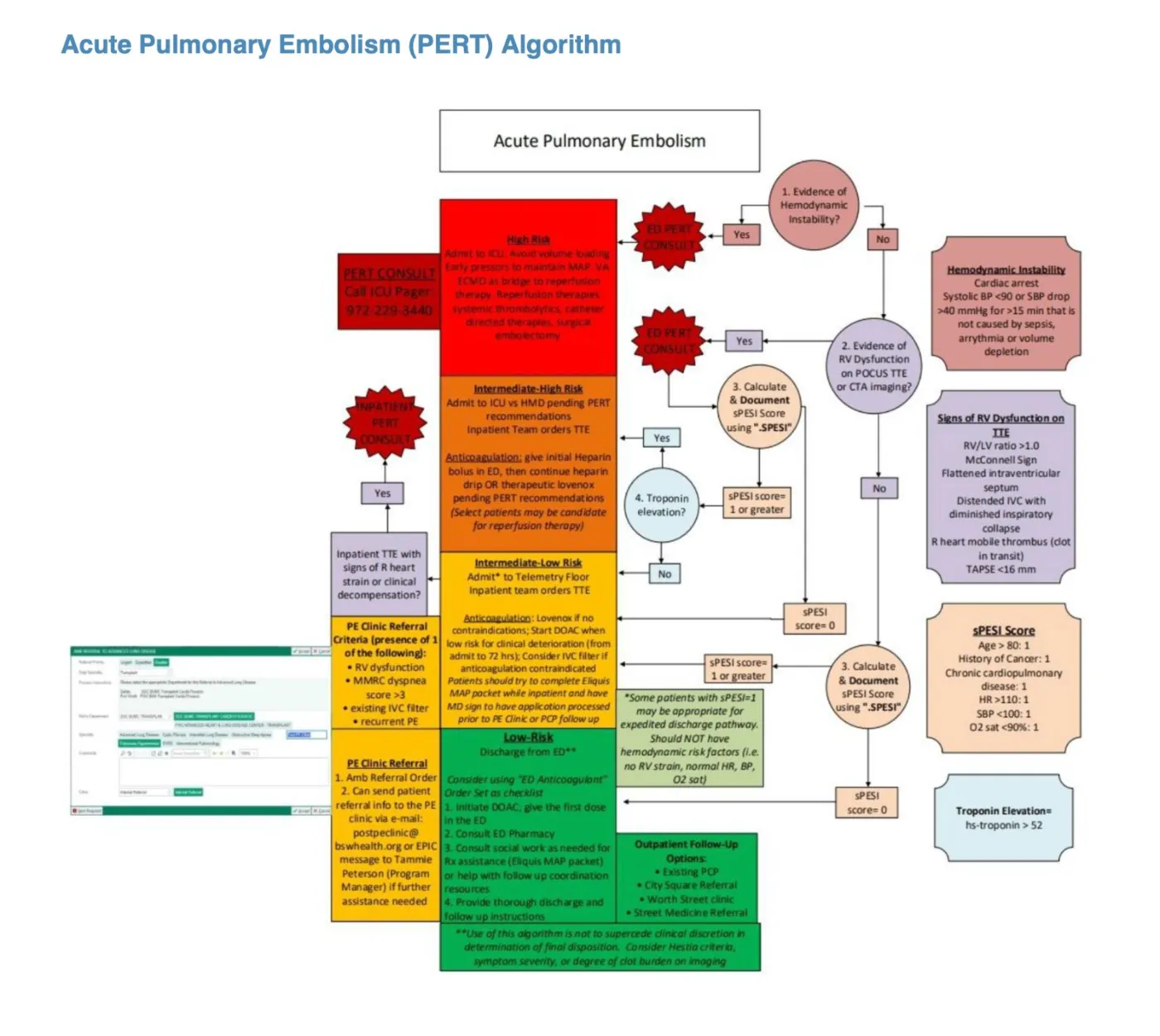
Acute Pulmonary Embolism (PERT) Algorithm
ICU
APACHE IV
Quality Initiatives in ICUs
- Completion of APACHE scores at 24hrs
- Central line checklist completion if one placed
- ABCDEF bundle w/ progressive mobility
- Prophylaxis measures - DVT prevention, H2 or PPI
- Line necessity
- Sepsis Bundle Compliance
- Sleep Promotion
- 7 Roberts -- Ventilator Bundle adherence and Ventilator Associated Pneumonia Prevention
- HOB> 30 degrees
- Chlorhexidine oral care q 4 hrs by RT
- SAT/SBT daily and if not, document why
- Subglottic secretion drainage catheter in place
- Aspiration prevention
- Early trach indicated
- Catheter directed BAL per RT within 24 hrs of intubation for ALL patients on 7 Roberts
CTICU (4 Roberts)
- 34 ICU beds split into 2 sides with an attending each
- 1 to 2 SCC fellows max
- 2 APPs on each side
- 9:00 A.M. – Multidisciplinary rounds – Rounding process:
- Round with heart failure cardiology and pulmonary on high side first until all cardiology patients are seen, then the high side finishes rounds on all other patients.
- Low side starts with all other patients and finishes w/ heart failure cardiology and pulmonary.
- Other groups asking to interrupt rounds to "run list" may join the group and weigh in when we get to their patient or consult attending privately.
- Round Expectations:
- RN presents data points and may discuss part of plan if APP has already discussed with them
- Heart Failure Fellow/ Attending input
- APP will give systematic plan providing rationale if needed
- If SCC Fellow present, then gives feedback on plan/approves/alters as needed
- Attending also provides feedback, if necessary, provides concise learning points and considerations.
- Please be respectful during rounds and allow others to finish their entire presentation before interjecting unless crucial information is needed.
- After rounds, work with the ICU team to prioritize patients and procedures and educate the team on timely topics as needed.
- 4:00 -5:00 PM –Daily afternoon walk-rounds to ensure the plan for the day was enacted, address changes to plan, plan for nighttime APP, and address issues that were not brought to the attention of the fellow or attending.
CT Surgery Team
- Immediate post-ops
- Royal Exchange:
- Ensure stability and guide post-op management
- 1st set of vitals, CI/CO, CT output, and labs will be shared by RN to CTS team
- NTCC to collaborate with CTS team thereafter to develop a plan for drips, volume, and rapid wean extubation candidacy
- NTCC APP will then be first point of contact for RNs for all issues day and night
- CT surgery APPs
- They are very involved in the ICU during the weekdays. Can help with transfer orders, liaison if surgeon in OR
- NTCC to CTS notifications
- Surgeons are incredibly involved, responsive – prefer overcommunication!
- Please notify CTS APP/MD for any of the following, day or night:
- Low CI/BP/UOP despite 2 interventions
- Increasing an inotrope, or starting a new inotrope
- CT output total > 100 ml/hr x 1 hour
- Hemodynamically significant rhythm changes
- Amiodarone or magnesium generally preferred over beta blockade
- Rapid escalation of vasoactive drips, or Levophed > 0.1 mcg/kg/min
- Shock state or code event – immediate call directly to surgeon
Cardiac ERAS
- CT surgery team responsibility for all order sets
- NTCC’s responsibility to advocate for the below metrics when safely possible
- Metrics: goal of > 75% compliance
- Extubated within 6 hours after surgery
- Avoid PRBCs for Hgb > 8
- MMPR: prescribe 2 or more non-narcotics post-op
- Dangle within 6 hours of case end
- Advance diet to more than full liquids by end of POD 1
- Incentive spirometry within 2 hours of extubation – ensure we are ordering
- VTE prophylaxis within 22 hours of surgery
- BS < 180 throughout surgery and post-op till discharge
- Remove foley POD 1
- DC any maintenance IVFs within 24 hours of surgery
- DC central line within 6 hours of transfer
ECMO
- When logged into Epic, find the tab for "Call Schedules" --> BUMC --> Who's on call right now --> search for ECMO or go under "cardio & thoracic surgery). If it is one of our attendings, it will also be found in ShiftAdmin.
- More information in the section on E-CPR/ECMO above
Heart Failure Team
- attending rotates through ICU weekly, may or may not have a fellow
- Rounds with team for MDR
- Night coverage heart failure attending or fellow available
Pulmonary Transplant team
- attending rotates through ICU weekly, may or may not have a fellow
Common Protocols
Vasoplegia Protocol after Cardiac Surgery
At listing, obtain G6PD
- Minimize pre-operative risk and assess post-operative hemodynamics
- When possible, minimize dosing of angiotensin converting enzyme inhibitors (ACEIs), angiotensin II receptor blockers (ARBs), angiotensin receptor-neprilysin inhibitors (ARNIs), hydralazine, nitrates, and milrinone
- Consider alternative inotrope or reduced dosing of milrinone intra-operatively, particularly in patients with pre-operative AKI
- Vasoplegia generally occurs within 24-48 hours after cardiac surgery; if onset is within 48 hours, proceed through following protocol; if onset is >48 hours of cardiac surgery, assess for presence of alternative shock state
- Utilize vasopressors to maintain MAP ≥65 mmHg (alternative MAP goals may be considered per provider discretion)
- Combined norepinephrine and epinephrine rate of at least 0.3 mcg/kg/min
- Vasopressin rate of at least 0.03 units/min (up to 0.1 units/min recommended in vasoplegia)
- Initiate stress dose steroids
- Hydrocortisone 50 mg IV every 6 hours OR 100 mg IV every 8 hours (use the second dosing regimen during hydrocortisone shortage)
- If MAP <65 mmHg and patient is receiving vasopressor doses outlined in step 2a and 2b, proceed to step 4
- Utilize hydroxocobalamin
- Dose: 5 g IV infused over 15 minutes
- Important considerations:
- Hydroxocobalamin is highly chromogenic and has been documented to falsely elevate colorimetric assays (includes hemoglobin, serum creatinine, lactate, basophils, glucose, bilirubin, alkaline phosphatase)
- Hydroxocobalamin can trigger a false blood leak alarm, preventing the effective use of hemodialysis
- Hydroxocobalamin can turn urine red
- If MAP <65 mmHg after 1 hour after administering hydroxocobalamin, move to step 6
- Utilize angiotensin II
- Dose: initial infusion rate of 10 ng/kg/min, titrated by 2.5 ng/kg/min every 5 minutes to a max of 40 ng/kg/min to maintain target MAP
- Important considerations:
- Risk of thromboembolic events (DVT prophylaxis should be ordered unless contraindicated; weigh risk versus benefit in patients with history of DVT/PE or hypercoagulable state)
- Angiotensin II should be the first vasopressor to be weaned off, ideally within 48 hours of initiation
- In refractory cases, utilize methylene blue (less preferred agent)
- Dose: 2 mg/kg IV infused over 15 minutes
- Relative contraindication: G6PD deficiency
- Important considerations:
- Due to the risk of serotonin syndrome, especially with high doses, avoid in patients on concurrent linezolid therapy OR with SSRI, SNRI, or MAOI usage without adequate washout period (2 weeks prior to methylene blue treatment)
- Use with caution in patients with significant PVR elevation due to the effects of nitric oxide synthase (consider use of inhaled epoprostenol when administering methylene blue)
References
Ortoleva JP, Cobey FC. A systematic approach to the treatment of vasoplegia based on recent advances in pharmacotherapy. J Cardiothorac Vasc Anesth. 2019;33(5):1310-1314.
Ltaief Z, Ben-Hamouda N, Rancati V, Gunga Z, Marcucci C, Kirsch M, and Liaudet L. Vasoplegic syndrome after cardiopulmonary bypass in cardiovascular surgery: pathophysiology and management in critical care. J Clin Med. 2022;11:6407.
Ortoleva J, Shapeton A, Vanneman M, Dalia AA. Vasoplegia during cardiopulmonary bypass: current literature and rescue therapy options. J Cardiothorac Vasc Anesth. 2020;34(10):2766-2775.
Methylene blue. Lexi-drugs. In: Lexicomp. Wolters Kluwer Health, Inc. 2023.
Hydroxocobalamin. Lexi-drugs. In: Lexicomp. Wolters Kluwer Health, Inc. 2023.
Angiotensin II. Lexi-drugs. In: Lexicomp. Wolters Kluwer Health, Inc. 2023.
Acute Type A and B Aortic Dissection Blood Pressure Management
Initial Admission Considerations:
SBP goal <120 mmHg
HR goal <80 bpm
Urine Drug Screen (UDS)
Adjust MAP goals for anterior spinal cord syndrome or concomitant ICH
Only place one arterial line, this should not delay OR
Initial Parenteral Antihypertensives
- Beta-blockers - First Agent (contraindicated in 2nd/3rd degree heart block and decompensated HF)
- Labetalol 0.5-6 mg/hr (preferred)
- Esmolol 50-300 mcg/kg/min - consider 500 mcg/kg loading dose
- Vasodilators - start AFTER beta-blocker (associated with reflex tachycardia)
- Nicardipine 5-15 mg/hr (preferred) - contraindicated in severe aortic stenosis
- Clevidipine 1-21mg/hr (much less volume than Nicardipine)
***see Clevidipine information below***
- Nitroprusside 0.3-10 mcg/kg/min (cyanide toxicity with prolonged use)
Transition to Oral Antihypertensives
(initiate and increase dose of oral agents in a step-wise approach in order listed below while titrating down intravenous agents)
*Note: oral agents can take 2-4 weeks before reaching maximal benefit of BP reduction
- Beta-blockers (combined alpha/beta receptor)
- Carvedilol (preferred) - starting dose 6.25 mg BID to a maximum 25 mg BID
- Labetalol - starting dose 200 mg TID to a maximum 800 mg TID
- Calcium-channel blockers (dihydropyridine)
- Nifedipine ER (preferred if patient swallowing) - starting doses 30 mg daily to BID to a maximum 60 mg BID
- Amlodipine 10 mg daily (preferred if patient has NGT)
- ACE-inhibitors or angiotensin receptor blockers (increased risk of hyperkalemia in AKI/CKD)
- Lisinopril (preferred ACE) - starting dose 10 mg daily to a maximum 40 mg daily
- Enalapril - starting dose 5 mg BID to a maximum 20 mg BID
- Losartan (preferred ARB) - starting dose 50 mg daily to a maximum 100 mg daily
- Valsartan - starting dose 80 mg daily to a maximum 320 mg daily
- Thiazide diuretics
- Hydrochlorothiazide - starting dose 25 mg daily to a maximum 50 mg daily (use caution in patients with gout)
- Vasodilators
- Hydralazine - starting dose 25 mg TID to a maximum 100 mg TID (associated with reflex tachycardia and sodium/water retention)
- Isosorbide mononitrate - starting dose 30 mg ER daily to a maximum 120 mg ER daily (preferred if patient swallowing) Isosorbide dinitrate - starting dose 10 mg TID to a maximum 40 mg TID (preferred if patient has NGT)
- Aldosterone antagonists (preferred in primary aldosteronism and resistant HTN)
- Spironolactone - starting dose 25 mg daily to a maximum 50 mg BID
- Alpha-2 agonist (abrupt withdrawal can cause hypertensive crisis)
- Clonidine (LAST LINE) - starting dose 0.1 mg BID to a maximum 0.3 mg TID
Clevidipine
- Clevidipine is an alternative IV calcium channel blocker that can be used instead of Cardene.
- Clevidipine is slightly more costly, but we are hoping with less fluid used and quicker control of BP, it will ultimately be cheaper.
- Clevidipine will greatly decrease the amount of fluid given!
- Clevidipine can be used without a central line! If you have a central line, then technically max concentrated Cardene is still less volume / hr than Clevidipine.
- Provider's job is:
- Order it through Epic. Modify the SBP goal to be < 120 for unrepaired dissections or < 140 for repaired dissections (unless otherwise specified).
- Also order triglyceride checks every 72 hours (it is similar to Propofol in that it's lipid based and tubing needs changing every 12 hours).
- Please bet at bedside for initiation and must have a-line when initiated
- Nurses initially need to titrate it every 90 seconds (and chart to reflect) until the goal SBP is reached. Nursing leadership has already done their education with nursing on this.
Post-Lung Transplant Management Protocol
- Neurologic:
- SAT daily by 07:30. Do not delay SAT or SBT, even if bronchoscopy is pending.
- Pulmonary transplantation team will perform the bronchoscopy without additional sedation and lidocaine only.
- Cardiovascular:
- Hemodynamic Goals:
- SBP < 150, MAP > 60, but can be altered based on surgeon/primary team preference or situational necessity.
- CVP < 5 with a mean PAP of < 30, and less than 50% of the systemic.
- Check CI on admit but then disregard as long as end organ perfusion is preserved.
- DON’T WEDGE THE SWAN. EVER.
- CVP Guided Volume Management:
- > 10 with P:F < 200 and/or non-cardiogenic pulmonary edema
- Start diuresis with goal negative 500 mL-1L over 24 hours
- If hypotensive, consider 25 % albumin with Lasix, or vasopressor to facilitate diuresis
- 5-10 with P:F > 250
- Defer fluids and diuresis
- < 4
- Defer fluids if acceptable end organ perfusion/hemodynamics
- If P:F < 200, consider 25% albumin with Lasix despite low CVP
- If hypotensive or increasing pressor requirements, give colloid in 250 mL-500 mL increments with reassessment
- P:F < 150, Primary Graft Dysfunction (PGD) 3, and/or severe pulmonary edema
- Diuresis and consider ECMO support if PEEP requirements > 8 and FiO2 > 60%
- Atrial Arrhythmias:
- Prophylaxis
- If normotensive and HR > 70, start metoprolol 5 mg IV q6h if NPO or metoprolol tartrate 12.5 mg-25 mg PO BID
- Treatment
- If normotensive or hypertensive: IV beta blockade in addition to PO maintenance.
- SBP < 100 or on vasopressors: give amiodarone
- Unstable tachyarrhythmia: cardioversion
- Discuss systemic anticoagulation with surgical and pulmonary transplant teams if persistent for 48+ hours
- Prophylaxis
- Subcutaneous heparin (SQH) 5000 units q8h starting POD 1 for VTE prophylaxis. Do not use Lovenox.
- Pulmonary:
- Initial Mechanical Ventilation Settings
- PC/AC Mode
- Inspiratory Pressure Strategy
- Titrate to achieve 6 mL/kg based on ideal body weight (IBW)
- Ask the RT to set ventilator alarms for < 5 mL/kg or> 7.5 mL/kg IBW
- Notify RN and RT not to adjust alarms and to notify provider if tidal volumes are consistently outside of > 93%, avoid O2 toxicity
- Spontaneous Breathing Trials
- Patient should be placed directly to 5/5 and have an ABG after 30 minutes
- Once extubated, ensure orders for chest physiotherapy (CPT) q4h, incentive spirometry (IS) q1h, and flutter valve q6h
- Inhaled Nitric Oxide (iNO) Weaning Protocol
- Post-operative iNO level is usually set to 40 ppm
- If meeting PAP parameters as described in Hemodynamic Goals section and O2 saturations remain > 93%, wean from 40 ppm to 20 ppm
- Q4h, re-assess, and if still meeting parameters, wean to 10 ppm, then 5 ppm.
- Once down to 5 ppm, wean by 1 ppm per hour until off, again assuming hemodynamic and oxygenation parameters are met.
- The timing and proportion of the wean will be adjusted by collaborative preference and situational necessity on a patient-to-patient basis
- Gastrointestinal:
- Nutrition
- If extubation is expected within 48 hours, keep NPO and defer post-pyloric/DHT placement
- Once extubated, patient must remain NPO until dysphagiogram is completed with speech therapy services
- If patient remains intubated > 48 hours, discuss DHT placement with surgical and pulmonary transplant team
- Prophylaxis
- Proton Pump Inhibitor (PPI) for GI prophylaxis
Dr. Doolabh Preferences
Surgeries
- CABG: he rarely does them, and they will come to BUMC
- Mini valves: sometimes single or double or triple valve repair/replacements!
- 75% of his cases will come to BUMC
- 25% cases will come to THH (operating Tues-Thurs only at THH)
- Straightforward cases may come out extubated
Communication
- Dr. Neelan Doolabh: (903) 372-9331
- Prefers text first during the day (has a call blocker to block spam)
- Call > text if urgent or during night time
- He will take call on his own patients 24/7 at THH
- He will come to handoff post-op to relay his preferences to RN, and RN can change the orders to reflect his wishes (ex: modify Cardene for his SBP goal)
- Usually rounds and writes his own notes by 0700
Preferences
- Ideally he prefers SBP < 130 for valves, sometimes < 115 for certain mitral replacements
- Keep foley and CVC at least until POD 2
- Notify if CT output > 100ml/hr x 1 hour (same as other surgeons)
- Pacing Swan
- Remove POD 1 prior to OOBTC as long as: CI > 2.2 off inotropes and no pacing needs
- Nurse driven Swan removal protocol at BUMC
- NTCC collaborative Swan removal protocol at THH
- VTE prophylaxis: does not want it started on his patients, unless they are morbidly obese / not mobilizing
- ASA 325mg instead of 81mg, unless also on systemic anticoagulation
- Manage post op afib as we already do. If afib lasts > 48 hrs, will generally start anticoagulation with DOAC at half dose before going to full dose
- Avoid Toradol, otherwise ok with multimodal regimen
- Mechanical valves: starts warfarin POD 1 without bridging
- Wants post-op and daily EKGs
- Usually diuresis with healthy dose of Bumex POD 1
- Chest tube usually out by afternoon of POD 1
- Home by POD 3-4 if all goes well
- Activity: move in the tube, no restrictions other than < 10lbs with RUE
Trauma and Surgical ICU (7 Roberts)
- 23 ICU beds, surgical, trauma and solid organ transplantation patients including liver, pancreas and kidney
- 2 Attendings split
- 1 Surgical Critical Care Fellow
- Sees all of the patients
- Rarely 2 fellows when pulm crit fellows rotate and they would split the patients
- 1 or 2 APPs
- 3rd year surgery resident, occasional EM R2, ortho R1, OMFS R1
- 6:30 AM – Sign-out with APP/Residents/ Fellows
- 9:00 A.M. – Multidisciplinary rounds.
- Round on transplant patients first, unless it is a Kidney-pancreas patient.
- M,W,F, Sun start at 701. T,Th,Sat start at 723. Weekends whatever works
- Rounding process:
- RN presents data points
- APP will give systematic plan providing rationale if needed
- Pharm D, dietician, Care Coordinator or other
- Fellow gives feedback on plan/approves/alters as needed.
- Attending input and also provides feedback if necessary, provides concise learning points, considerations.
- Please be respectful during rounds and allow others to finish their entire presentation before interjecting unless crucial information is needed.
- At end, Fellow summarizes plan for day
- After rounds, work with the ICU team to prioritize patients and procedures and educate the team on timely topics as needed.
- On Tuesday and Thursday afternoons each attending assigned an ICU topic to have a casual lecture on. Wendy Shelley sends a calendar invite. Attending will pick a time to do with team
- 3:00 -5:00 PM – daily afternoon walk-rounds with attending to ensure the plan for the day was enacted, address changes to plan, plan for nighttime APP/ resident, and address issues that were not brought to the attention of the fellow or attending.
- SCC fellows to lead rounds individually on their 2nd time to rotate on 7 Roberts
- Wednesdays - Fellow leads high side rounds
- Thursdays - Fellow leads low side rounds
- Attendings will do patient /dedicated family rounds during this time
Transplant patients:
- Attend “Royal Exchange” when anesthesia drops off patient, but we don’t get involved at this time unless we are officially consulted.
- If transplant patients are still in the unit at the 48-hour mark, then we are automatically consulted.
- We are always consulted on kidney-pancreas transplant patients from the beginning.
- We are only managing the ventilator and need to communicate all other issues to the transplant fellow and the attending.
- Utilize the 24-hour transplant phone to communicate, 469-766-3354
For all patients: NTCC team must be present for any new admissions to the ICU and for any patients returning to the ICU after an OR case to get the “Royal Exchange” from the anesthesia team. Attending presence not absolutely expected, but recommended.
Brain Declaration
- STA auto referrals and please NO PREMENTIONS to family
- Determination and Pronouncement of Death or ask charge nurse to help you find policy
- in a minor- they need 2 consecutive tests 24 hrs Apart.
- Use brain death tool in EPIC
DCD patients
- Once the family signs the consent for DCD patients, they are still managed by NTCC until death pronounced. STA can provide recommendations but need to have NTCC put in orders if NTCC agrees with the orders.
RN Phones per Room numbers 7 Roberts - cannot dial from outside line, can call main line and they can transfer 214-820-3222
- 1,2: 43-5990
- 3,4: 43-5991
- 5,6: 43-5992
- 7,8: 43-5993
- 9,10: 43-5994
- 11,12: 43-5995
- 13,14: 43-5996
- 16,17: 43-5997
- 18,19: 43-5998
- 20,21: 43-5999
- 22,23: 43-9776
- Charge: 42-0491
- Resp 1: 42-0054
- Resp 2: 42-8294
- Pharm: 42-2339
- Blood Bank: 42-3263
- Baylor Police: 42-4444
- Case Manager: 48-2453
- APP/ resident Hall phone #1: 43-1021
- APP/ resident Hall phone #2: 42-0252
- APP/ resident Hall phone #3: 42-0208
- RRT RN phone: 42-7782
Trauma and EGS
EGS - Covers all EGS pts (consults, OR, rounds, 15R huddle 10 am)
- Gold Team --- resident compliment is changing, more to come [a]
- R4,5 Chief of service
- R1 – floor
- APP
- Blue Team
- Fellow if on elective – Chief of Service
- R3 – Chief of the service
- R1 – floor
- APP
Trauma - covers all trauma pts (activations, consults, OR, rounds, 6T huddle 11 am)
- Team
- R4 or R5 – Chief of service
- R2 – Consults
- R1– floor
- 2 APPs – floor
ACS (EGS / Trauma) Contact Phone number / Pagers
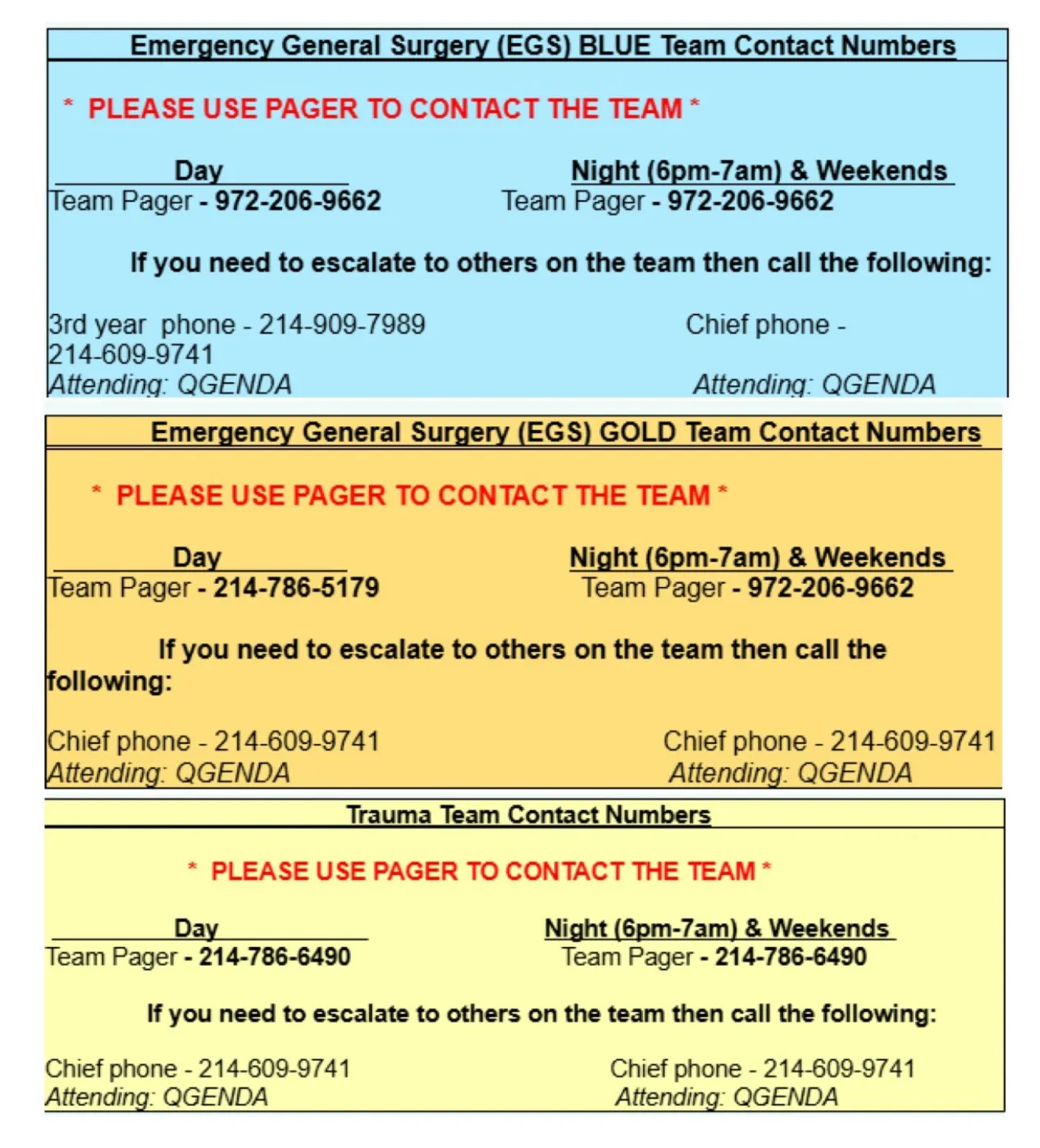
Sign-out 7 AM everyday Sparkman Conference Room (except Fridays in Trauma Conf room)
- Overnight trauma call attending
- EGS day attendings x 2
- Trauma day attending
- Fellows and residents on Trauma/EGS service
- APPs on trauma / EGS
- Format:
- Trauma chief to run report
- PGY2 to run computer/images
- Will discuss:
- Overnight Consults
- Any additional ICU overnight admissions
- Significant overnight events and concerning patients
- Cases on the board for the OR that day
- Kudos
HMD admit vs consult for ACS
Admission vs Consultation - URSA
| Diagnosis |
Admission to URSA / URSA primary |
URSA as a consultant |
Not an URSA admission or consultation |
Comments |
| Breast |
Abscess |
|
Mastitis, Associated Mass |
Pts to follow up with breast surgeon rather than URSA |
| SBO |
SBO |
Radiologic findings incongruent with clinical presentation, enteritis, SBO in a patient who is not a surgical candidate |
Associated with inflammatory bowel disease, malignant SBO |
ED to feel free to call URSA to help differentiate SBO if needed. |
| Biliary |
Clear or strongly suspected diagnosis of biliary pancreatitis, necrotizing biliary pancreatitis, cholecystitis, choledocholithiasis (w/ GB present), retained stone from URSA surgeon |
Unclear etiology of pancreatitis, Cholecystitis diagnosis in question, Acalculous cholecystitis managed with C tube, patient who is not a surgical candidate |
|
|
| Intestinal disease |
Appendicitis, perforated stomach or small bowel, acute abdomen / peritonitis |
Intra-abdominal or retroperitoneal abscess or bleed w/o surgical source |
Inflammatory bowel disease, colonic perforations, diverticulitis, malignancy, infectious enteritis, GI bleed |
|
| Skin and Soft tissue |
NSTI
Abscess requiring OR w/o other medical indications for admission |
Cellulitis
Abscess already drained in ED |
Hand and foot infections, isolated to vulva or penis/scrotum |
|
| Trauma |
Poly trauma, neuro trauma, abdominal trauma, thoracic trauma, snake bite |
Isolated orthopedic injuries, isolated facial injuries |
Non-acute trauma for which inpatient management of injuries is no longer necessary (i.e. transfers, readmits not directly related to injury) |
|
Residents to staff consult before asking for admission to HMD.
HMD consult on our admitted pts –
- Age > 70 with > 1 chronic medical issue/poly pharm concern or any pt w/ one uncontrolled medical issue ---->> is this correct or is 65 and 2 med problems ????
- HMD will take over as primary if outstanding and ongoing medical issues are keeping them in the hospital and the surgical issue are resolved
Delineation with other surgical services per Dr. Monday:
- Some ongoing work with colorectal
- They will obviously keep perf tic, IBD, their own patients, colon cancer
- Current things we are working on
- CRS- peri-rectal abscess
- URSA- peri-anal abscess
- Free air when not clear source- URSA/residents should see and staff. If URSA attending thinks truly colorectal, attending to attending call. If not clear or non-colon cause possible, URSA take to OR, and can call in CRS if it is found to be colon
- When we cover ICU pt and has Ogilvie's, we have high variability in how much we manage vs calling CRS. We are working together on a protocol for first steps and when to call CRS standardization
Posting OR Cases:
- Case Posting Cheat Sheet.pptx
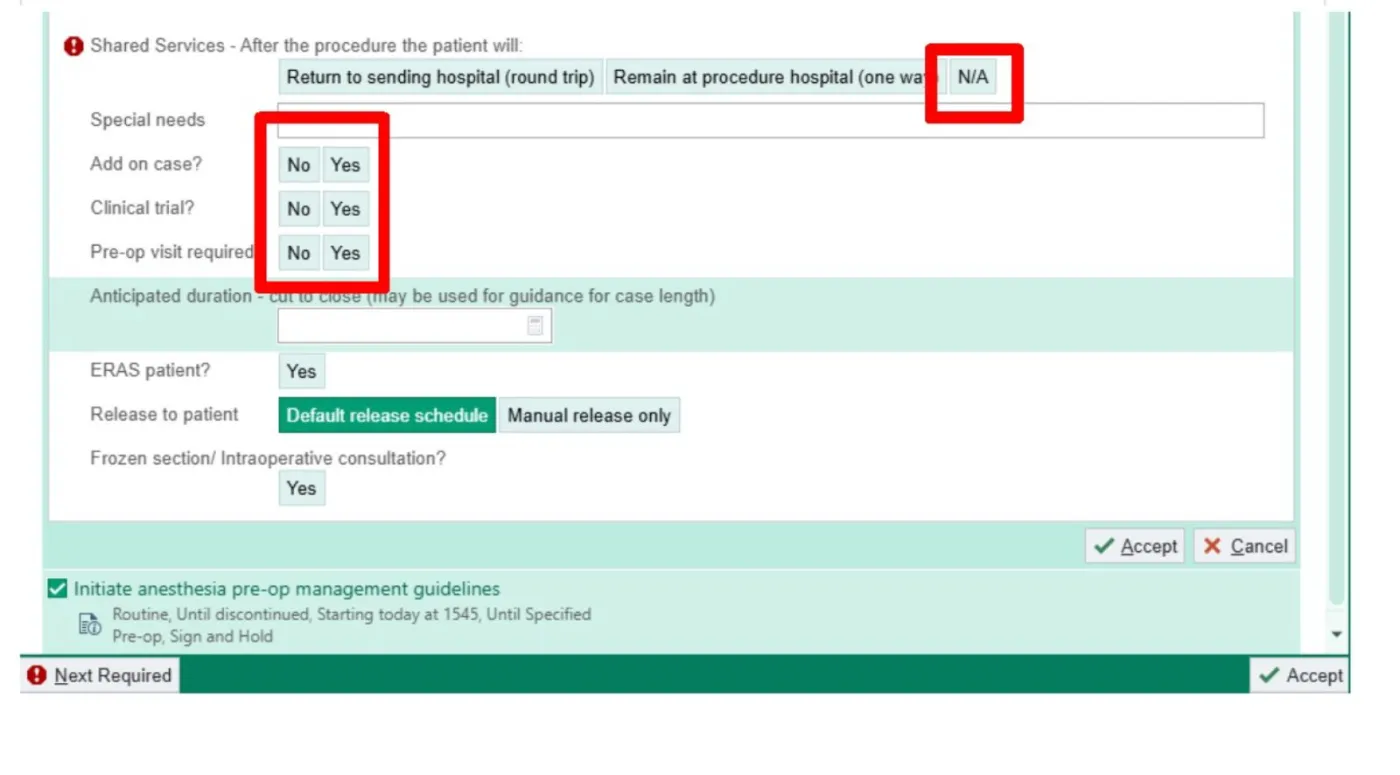
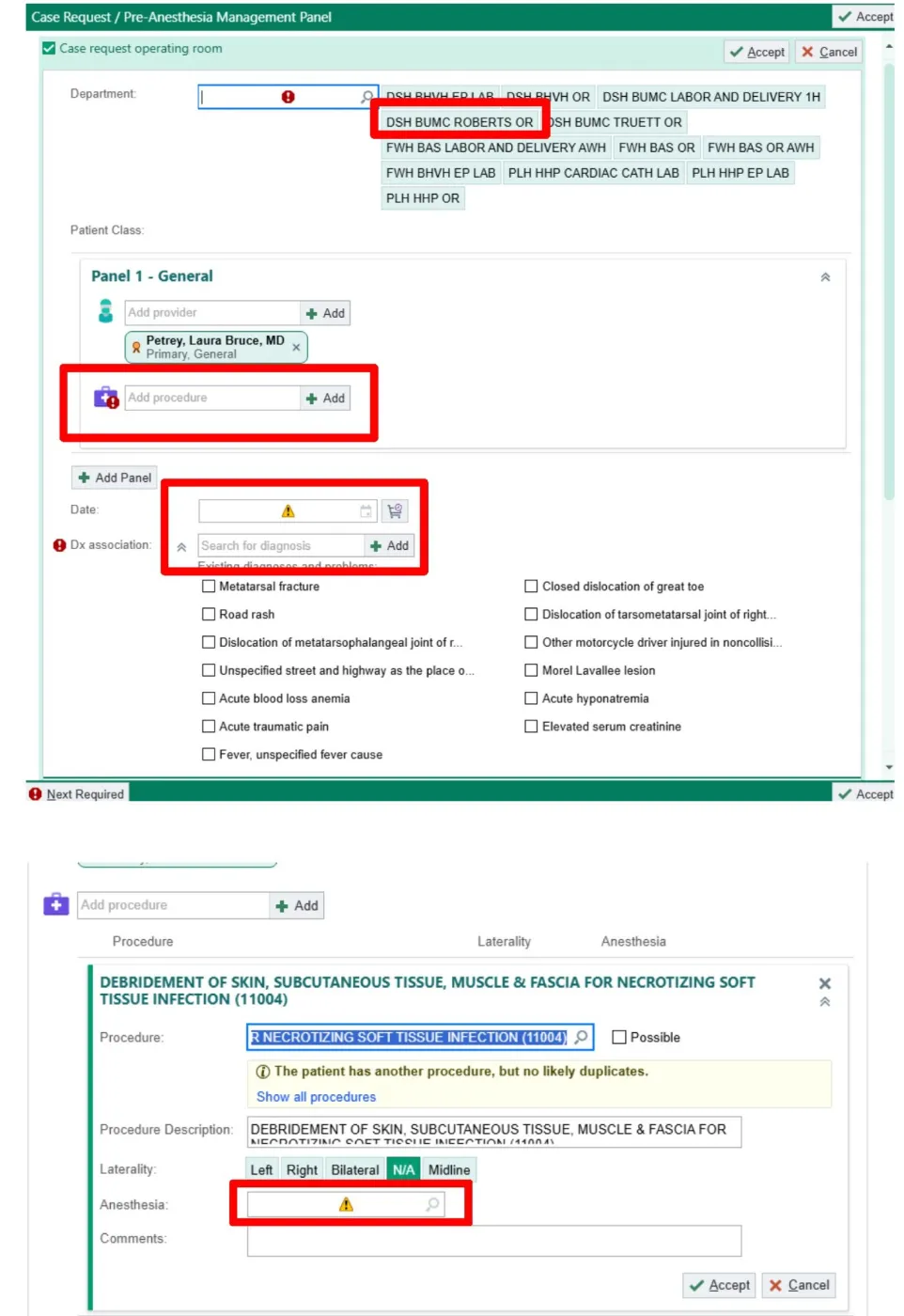
- Please do it correctly. Red boxes must be filled in.
- Post cases before 1 pm if at all possible –place holder for next day. Can change later
- First priority is if specific time needed for another service to join. Then, ideally ICU patient not first. Ideally, pts that can DC from PACU earlier in day. Keep in mind pts with other appointments- don't want OR to send while they are in HD. Pts on infectious precautions have terminal cleans which take more OR time, so ideally toward end of day
- Must Haves
- Date
- Location: Roberts OR
- Panel Length: time for case
- Special Needs: this will print for nurses so utilize it! Positioning, wound vac supplies, drains etc – they can pull prior to starting the case/during turn over
- Procedure Description: delete and write in what the actual case is
- When posting I&D’s make sure you edit the procedure and put the location of the debridement
- Please remember to put in a note w/ smart text .surgerydelay if case moved to the next day due to OR delays
Transfer Center Tips from Dr. Kara Monday
- If it’s a call about something we generally do, the default answer should be yes. They’re calling because they need help.
- If they’re calling for something that another team does- WE DO NOT ACCEPT FOR OTHER TEAMS. Even to the ED. This robs that service of the ability to triage or get doc to doc, and we would be mad if people did that to us. It also reinforces transfer center calling us for things not in our purview by rewarding them with an answer, when we want them to follow the delineation of which service to call for what
- Everything is a trap. Be careful providing extra rationale because sometimes words are getting twisted and they’re writing that we are declining patients when we didn’t. We can accept but encourage them to continue trying to find a sooner placement (totally fine for an accepted patient to fall off the transfer list because they were accepted elsewhere sooner- and this is tracked and reviewed)
- Unless there is diagnostic uncertainty that would affect which team patient admitted to or the patient is critical and needs to bypass the bed queue, no need to accept to the ED- can come to med surg or tele or wherever
- Transfer center should start patient presentations by saying if there are other teams they have discussed with already (“MIS Dr. Arnold declined this patient because...” or “HPB Dr. Gupta accepted consult and HMD said general surgery should admit”). You can see how the latter example might be important background information that isn’t often provided and might change what we say/do. We do not always have time to pull up transfer log and investigate, so asking this if they don’t give it probably worthwhile to ask
Patients Leaving AMA
Trauma
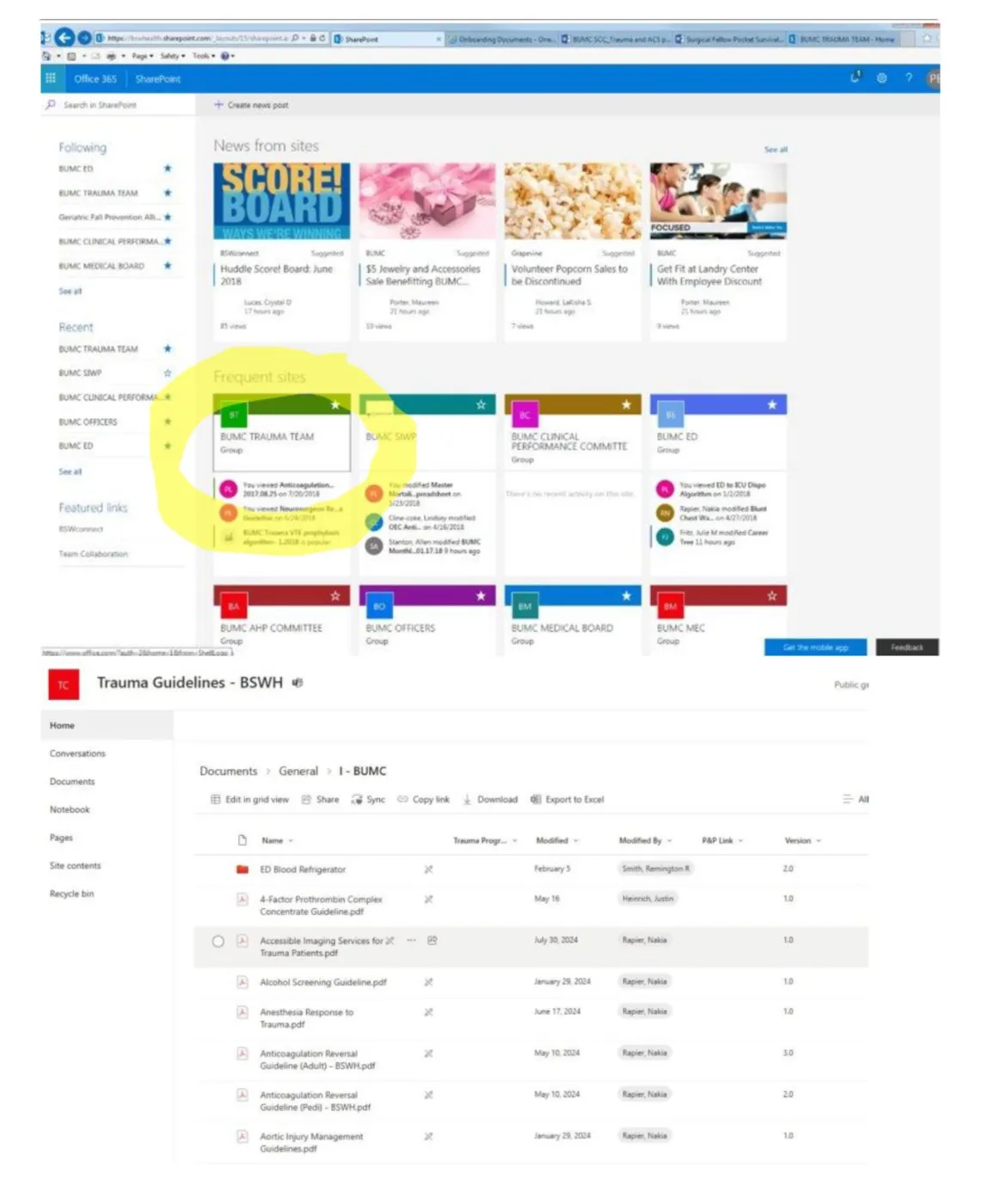
Trauma Guidelines on Sharepoint, “BUMC Trauma Team”
- Drs. Mooney or Petrey or the trauma program coordinator can give you access
Ortho Admits/ Consults
- Will admit isolated orthopedic injuries if GCS 15 and collar cleared. If not, then trauma admits for the first 24 hrs and does tertiary in am. If mentation back to baseline and collar cleared then transfer to ortho
- Fracture associated compartment syndrome done by ortho, No fracture done by URSA
- All patients with a pelvis or lower extremity fracture discharge on ASA 325mg daily x 1 month unless contraindicated. ( TBI, GI bleed, Plts < 100, allergy)
- Make sure you have plain films before consulting ortho unless its an emergent ortho consult
- For trauma pts on ECMO who have orthopedic injuries.
- Please establish a text thread between pertinent attendings to work out when to fix his orthopedic injuries. We do not want to put off repair unnecessarily if the fx is one that delay in repair will affect outcome. Ortho attg, Trauma attg, ecmo attg, CVICU attg. That way everyone is on same page about what needs urgent repair vs what can wait and when appropriate to take to OR.
Emergent IR
- Definition: Solid organ injury, pelvic fx, or other area of bleeding amenable to control by IR that:
- Has obvious arterial extravasation on CT
AND
- Required blood for hemodynamic instability
- Goal: less than 60 minutes from IR consult to needle time
- Procedure:
- Notify IR
- 214-820-9558 (body) or 214-346-1330 (neuro)
- “This is Dr. ___ at BUMC notifying you of an Emergent Trauma IR Activation for (body part) intervention. (patient name), (patient location, Call back #). Please confirm that you have received this and are activating according to the protocol. Your name please? Thank you.”
- Notify Anesthesia
- 214-820-6364
- “This is Dr. ___. We have initiated an EMERGENT TRAUMA IR ACTIVATION for (patient name), (patient location), (call back #). Please confirm that you have received this and are activating according to protocol. Your name please? I am confirming that you are heading to IR now and we will meet you there? Thank you.”
- Notify ED flow and patient’s RN
- Trauma Provider and RN transport patient to IR
- Trauma Services will then
- Enter IR order “IR embolization transcatheter”
- At least one trauma member will remain with patient throughout transport to IR and stay with patient during procedure unless cleared to leave by trauma and IR staff
- Non-Emergent IR consults call 214-820-3206
Friday Coverage for Resident Protected Time
- Friday OR covered by one of the SCC fellows
- Off service residents available: ortho/ OMFS interns and R2 EM sometimes
- APPs will be assigned some of the patients
- If need extra help with TARTs, consults in ED, reach out to other EGS or trauma attending and if they are busy, then call the ICU.
Conferences
All
- NTCC ICU Conference, Wednesdays 2 PM, 4 Roberts Conference Room - Nicole Gorecki leads.
- Pulmonary/ Surgical Critical Care Conference, Tuesdays 12 PM, Sparkman Conference Room, 2 Pickens
- URSA/ NTCC Business Meeting, 4th Wednesdays, 6 PM, UrSA Office, 2710 Swiss Avenue - Petrey can add you to calendar invite
ICU/ Surgery
- Trauma Operations/ TMPI, 4th Wednesdays, 3 PM Sparkman Conference Room, 2 Pickens
- ICU Peer Review, 2nd Tuesday. 3 PM, Webex
- EGS Committee, 2nd Tuesdays, 3:30 PM, Sparkman Conference Room, 2 Pickens
- Trauma Grand Rounds, 2nd Thursdays, 2 PM, Webex
- Surgery M&M, Fridays 7 AM, Sparkman Conference Room, 2 Pickens
- Surgery Grand Rounds or Chiefs, Fridays 8 AM, Sparkman Conference Room, 2 Pickens
CTICU
- High Risk Hearts, 7 AM Fridays; BHVH Classroom A/B (1st floor)
- Aortic Conference; 7AM Tuesdays. BHVH Cree Conference, 1st floor
- ECMO Committee, 4 PM 3rd Thursday. Mennel Room, 10th Floor Sammons
- Heart Selection Committee, 7AM 3rd Thursday, 9th floor Sammons
- Heart failure Conference (4R fellows) Thursdays 12PM; webex
Plano Heart Hospital General Surgery
Who is who
- Clarence Gary, Director Heart Hospitals
- Jennifer Luna, Manager Medical Staff Services
- Deann Keesling, Manager Medical Staff Service
- Araceli Relampagos, OR nursing manager
- Nita Kaviani, OR supervisor
- OR scheduling 469 814-3565 option1 then 3
- Important phone numbers for doctors, APPs are in the NTCC google contact list. Add more as you find them
Hospital Layout
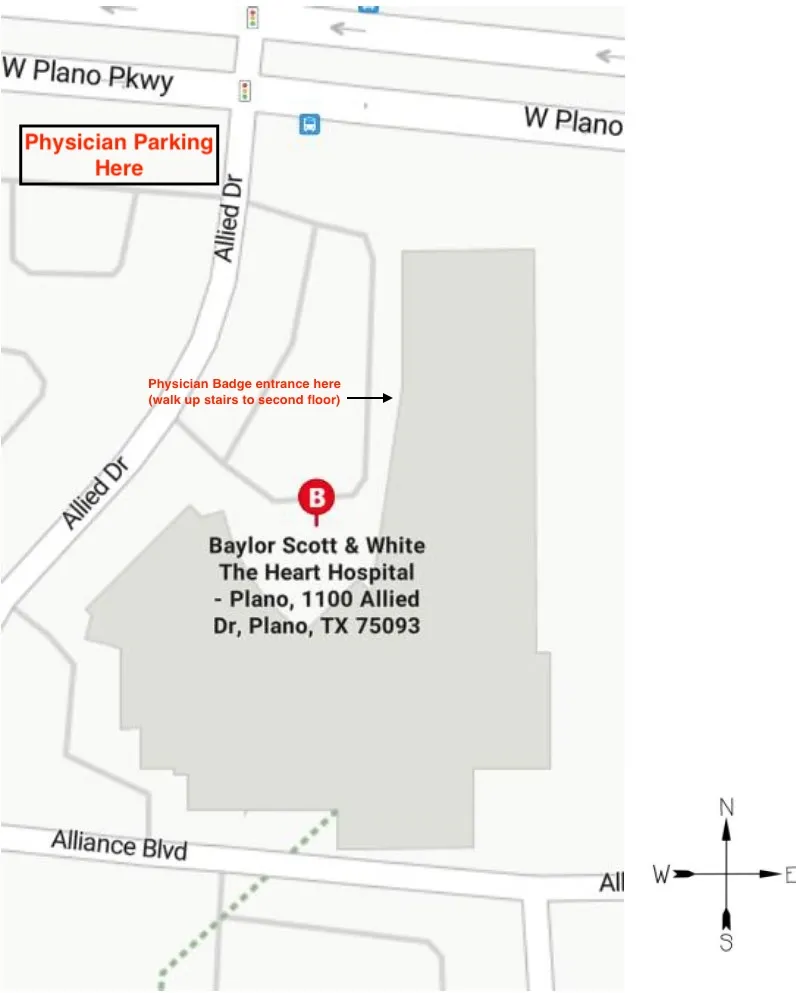
- Physician Parking: at the corner of Allied Drive and W. Plano Parkway.
- The patient's wings are on the Southwest, and the procedural stuff and administration is in the North wing.
- Second floor elevators on public entrance side take you to OR waiting. Go north toward the consulting rooms and there is a small door all the way to the left into the OR. As you go through to your right are the service elevators then preop and PACU.
- Continuing to your Left (North wing) down the hall at far end are conference rooms. Before you get to the end, there is a hall to your right. Locker room at the corner. Continue down the original hall and medical staff services are right there.
- In the locker room there is a scrub machine that requires a QR code. You can access the OR through the locker room.
- Continuing down the hall near the end is the lounge to the right. Nice food. You can exit out from there on the opposite side down the hallway with the conference rooms. There is also a computer work room in the lounge that you can use.
- Just past where the lounge is a door on the left, they call “the war room”. Multiple computers to work on and do notes.
- The hall makes a 90-degree turn to the right. Multiple offices on the left of chiefs of service, nursing admin for the OR and others. This hall takes you into the OR 10 ORs in a rough square. 3 hybrid rooms, 3 robots.
- Walking past the offices, here is a double door and the first office on the left is where I got you all signed up for scrubs etc. Cannot remember her name, sorry.
- If you go back to the service elevators and go south, on your left you will see preop and another OR entrance. The front desk is there. To your immediate left as you go in is the scheduling office.
- PACU is in and to your right.
- You can enter the patient wing from PACU or from the hallway where you were going down from the elevators.
- The ER is on the ground floor. Main # 469 814-3575.
General Info
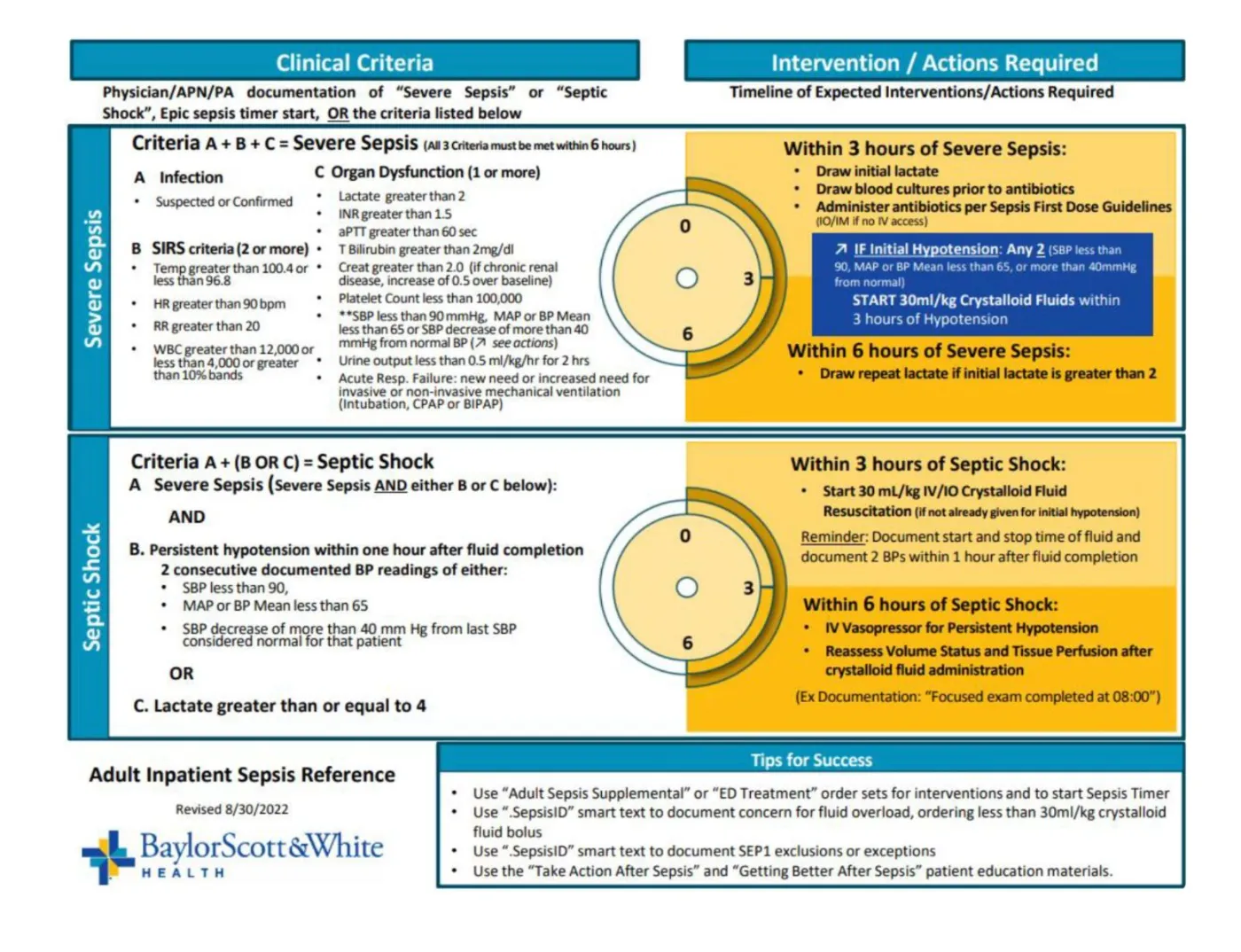
Sepsis Documentation
- Required by BSW for patients who meet sepsis criteria
- Must utilize Sepsis order set and write Sepsis note, every time
- Order Set: Adult Sepsis Supplemental
- Can order antibiotics, cultures, and fluid boluses
- Must order initial lactate and document if subsequent lactate is not ordered
- Sepsis Note: “.sepsisID”
- Fill note out and document any exclusions (no fluid boluses, f/u lactate, etc.)
BSW Sepsis Criteria
- Dysregulated response to infection
- 2 out of 4 Systemic Inflammatory Response Syndrome (SIRS) + infection
- Heart rate >90
- Respiratory Rate >20 or a PaCO2 <32
- Temp > 100.4 or < 96.8
- WBC >12 or <4 or > 10% bands
- Severe Sepsis = SIRS + infection + end organ damage
- Septic Shock = SIRS + infection + hypotension not responsive to bolus or Lactate >4
Step by step instructions / requirements for BUMC documentation requirements
Services, Admissions, Transfers, Discharges
Admission Process
- Services
- ICU, EGS Gold or Blue and Trauma patients
- ICU
- NTCC is usually a consultant in 4 and 7 Roberts unless admitted to URSA
- If the patient is being admitted to the hospital from OSH (such as ECMO evals) or from the ER, you will need to write an H&P instead of a consult note.
- When you create a note, be sure and change note type to H&P.
- If the patient already has a H&P done during this admission, we can do our usual consult note. Ex: Patient admitted by CT or hospitalist team that we are now taking primary for s/p CABG.
- Use ICU admission order set ***
- Change attending to the day attending for that stretch.
- PLEASE ensure we are doing our APACHEs.
Transfer Process
- All CTS, vascular, and URSA downgrades are returned to their primary teams.
- Some patients will transfer to HMD. NTCC is responsible 24/7 for handoff to the hospitalist team when a patient transfers out of ICU. This means we are also responsible for doing the transfer patient order + order reconciliation.
- Go to the transfer tab.
- Order reconciliation (dc all ICU orders, clean up meds, resume appropriate home meds).
- Complete the transfer patient order.
- ICU to floor transfer for EGS or Trauma
- Triple text to 6T NP, chief and intern
- Current room number, MRN, pt initials, admitting dx and if they want you to call back to discuss further details.
- Transfer Note (ICU Pause)
- Enter a separate note under “plan of care” with the dotphrase “.icutransfer” PAUSE note
- All Trauma patients > 65 y/o and if have 2 medical problems that need work, then consult Hospital Medicine (HMD) upon transfer --- check on this...
Discharge Process
- If the patient discharges from the ICU to SNF/OSH/morgue, NTCC will be responsible for discharge orders and summary. This does not need to be cosigned by an attending.
- Remember that APPs can prescribe T#3 and tramadol at discharge, but if the patient needs anything stronger, the attending will need to prescribe it. === combine with the dc stuff above or below
URSA DISCHARGE INSTRUCTIONS
- In Epic:
- Under DISCHARGE Tab, click Discharge- All Others (Example: Home or BSWH facilities where you do not have admitting privileges)
- Under Discharge Reconciliation (second section on page), click Go to Discharge Order Reconciliation
- Complete Tab 1. Disposition (choose Home, SNF, IPR, LTACH, other hospital, etc.), click NEXT
- Complete Tab 2. Reconcile Discharge Problem List
- Note: Anything in yellow must be addressed prior to discharge, choose Active or Resolved
- Complete Tab 3. Review Orders for Discharge
- Click Select a pharmacy (if not pharmacy listed) on bottom right corner
- If no pharmacy listed and patient has insurance: call RN to put in patient's pharmacy
- If patient does not have insurance and needs Rx assistance, use Baylor Pharmacy (SW will deliver meds to patient's room)
- Monday-Friday before 5pm: Baylor #101
- Saturday-Sunday and Holidays: Baylor #111
- Address all medication, including home medications
- Note: If this is TBI, no blood thinners, aspirin or NSAIDs unless approved by NSGY/UrSA; If this is a gastric ulcer patient, no NSAIDs, etc.
- Address all medications, including Inpatient medications
- APPs cannot order Schedule 2 and above for outpatient use (e.g. Oxy, Norco)
- You cannot PRINT any scheduled medications (including Tylenol #3, Tramadol)
- Note: If an ortho patient, do they need AC at discharge? (Lovenox x30d)
- Once all medications addressed, you should see a green check mark that says Reconcile Meds for Discharge is complete
- Complete Tab 4. Review Cont RX/PMP
- If you are prescribing any scheduled medication, you must review the TX PMP website and mark as reviewed
- Complete Tab 5. Orders Sets
- Select General Discharge
- Under Discharge Instructions, utilize dot phrases (ex: .SBODC, .URSACERVICALDC)
- All patients need Follow Up Instructions, including the phone numbers
- Dot Phrases for URSA Follow Up: (.URSAFU, .NOFUURSA, .FUCALL)
- Once completed, review orders.
- If you are ready to discharge patient, click Discharge Patient and complete Discharge Date and Time, Disposition
- If you are just prepping patient for discharge, click X on Discharge patient
- Once reviewed, click Sign in bottom right corner.
Hospitalist Teams
- HMD
- QGenda for call schedule
- Consult for trauma pts as above, > 65 y/o and 2 medical problems --- duplicate
- Consult for assistance with medical issues on others
Consultants
- See NTXCC contacts for all phone numbers
- Please add any additional contacts you may get along the way
- Common Consultants
- To find the on-call physician, BUMC.Qgenda on any phone / website
- Acute Pulmonary Embolus team (PERT)
- Cardiologists
- Heart failure: QGenda, most cell numbers are in ntcc google contact
- Occasionally EP, QGenda
- Stat ECHO
- Daytime call 214-588-0150
- After hours 5:30P – 6:00A, page on-call MD
- CCT 469-800-7400
- Heart Failure Team Qgenda
- Nephrologist
- Drs. Hebert / Colbert team preferred by CTS and URSA
- DNA team if an established patient
- ID
- See physician call schedule for on call doc
- NTIDC preferred if we have a choice
- Neurologist
- If an acute stroke, call RRT. if not available, then NTCC calls neurologist
- If routine consult needed, see physician call schedule as above for on call doc
- Pulmonology
- GI/Hepatology
- See on call schedule
- Some hepatologists also do their own EGDs
- Supportive & palliative care
- Place consult in Epic and must call (phone number in order on EPIC)
- Be clear in comments if they are requested for goals of care or support only, and ensure all other teams are on board with code status discussions
- Music Therapy
- consult in Epic under music therapy
- Child life specialist
- First offer service to patient/family, and if interested
- Place consult for palliative care child life in Epic and include any pertinent comments
- 214-818-6711